
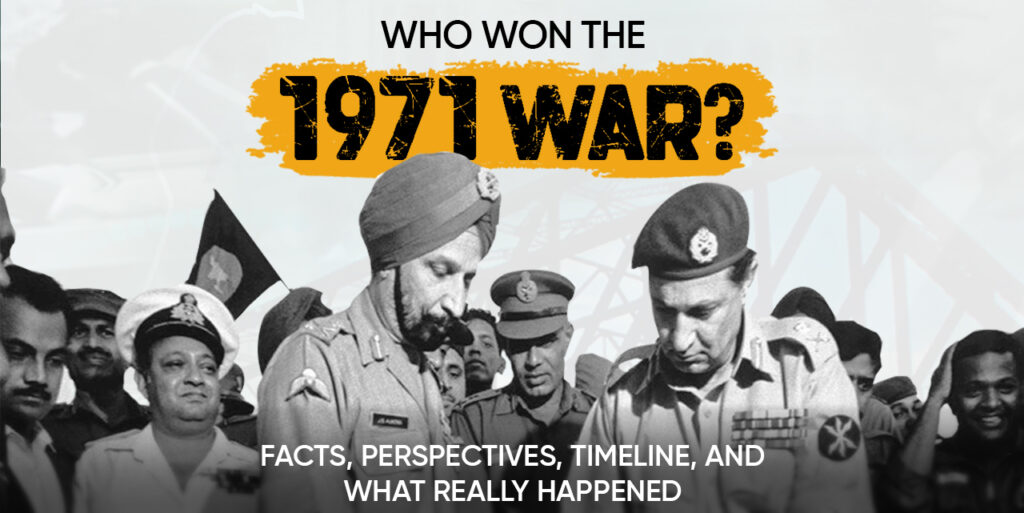
The story of the Indo-Pakistani War of 1971, often called the 1971 War, is deeply intertwined with the history of Pakistan, the creation of Bangladesh, and the region’s geopolitical dynamics.
The war that has claimed so many lives is still not fully understood; one even has to consider who really won and who really lost. In Pakistan’s case, we need to extensively analyze the background, the timeline, and the outcomes to determine all the root causes of the war that left it with so many losses.
To be specific, we are going to take a chronological order through the major phases, looking at the events and people’s viewpoints in the 1971 War, and finally, we will draw our conclusions regarding the reasons and effects of the sad war.
Pakistan’s Independence and the Background
India, known as the Hindustan before 1947, separated from the British empire in 1947, which led to the establishment of two independent states, India and Pakistan. Speaking of Pakistan, the newborn nation was actually divided in two parts, the west and the east part which were situated miles apart; the west part, termed as West Pakistan, now Pakistan, and the east part, called East Pakistan, is now called Bangladesh.
Right from the start, the two regions were separated by the major issues of language, culture, economy, politics, and even geography. The Map of Pakistan at that time was quite different, as it showed two parts that were divided by over 1000 km of Indian land.
Pakistan was still fighting in wars during the period from independence to the 1971 war in order to keep the territories it had acquired. Some of the important confrontations were:
- The first war of 1947-1948 was over Kashmir.
- The 1965 war with India was also mainly about Jammu & Kashmir.
The wars that were fought during this period established certain practices and shaped the Pakistan Army’s perception and identity.
East-West Pakistan: Language, Business, Geography
The two wings had huge differences:
- Language: East Pakistan was a Bengali-speaking region, while West Pakistan was primarily Urdu-speaking and other languages. Sheikh Mujibur Rahman, along with the Bengali leadership kept persistently asking for the acknowledgment of Bengali.
- Economy and Business opportunities: It was open secret that the East was economically deprived and exploited, and the people in the east felt that way because the resources were being diverted to the west instead of remaining in the east.
- Geography: The very fact that East Pakistan was detached from West Pakistan by Indian territory posed a great challenge to the government, logistics, and even defense. This geographic separation also resulted in the formation of different cultural identities.
Such differences created bases of division and tension, which eventually led to the 1971 War.
What Led to 1971?
Political Tension
The December 1970 general elections held in Pakistan turned out to be a great victory for Sheikh Mujibur Rahman’s Awami League party, which got almost all the national assembly seats from East Pakistan and thus became the biggest party in East Pakistan.
Nevertheless, the political party that governed West Pakistan, both the military and the civilians, could not accept the defeat and refused to hand over power. The refusal triggered protests in East Pakistan.
The conflict took a turn for the worse when the government imposed military rule in East Pakistan, which resulted in widespread rioting, and East Pakistan was thrown into anarchy.
The Pakistan government ultimately resorted to using military force against its citizens: and the military action dubbed “Operation Searchlight” was launched to suppress the riots in East Pakistan. The political tensions were the main internal reason that the war broke out.
Foreign Involvement
The international intervention, however, made matters even worse, although the conflict in East Pakistan was primarily an internal one:
- India provided the liberation fighters of East Pakistan (Bengalis), who were called Mukti Bahini at the time, with various forms of support, which included training, shelter, and logistics.
- On December 3, 1971, Pakistan countered against India with pre-emptive air strikes (Operation Chengiz Khan), which, unfortunately, resulted in India’s active involvement in the war rather than stopping it.
- The U.S. was discreetly supporting Pakistan during the 1971 conflict, while at the same time, it publicly claimed it had stopped its aid. Nixon and Kissinger secretly sent military supplies, at times through third countries, which also served as a show of power and warning to India. The USS Enterprise aircraft carrier was dispatched to the Bay of Bengal.
- Furthermore, India and the Soviet Union also had a pact (August 1971), which guaranteed India’s military support during its intervention.
Hence, what initially was a domestic crisis in Pakistan escalated into a total war between India and Pakistan, with the intervention of foreign powers.
Timeline Leading Up to War
- December 1970: General Elections took place.
- March 25, 1971: Military operation named Searchlight initiated in East Pakistan by the west.
- March 26, 1971: Bangladesh declared independence from East Pakistan.
- November 1971: India increases support to Mukti Bahini by a large margin and gets ready for invasion.
- December 3rd, 1971: Pakistan initiated Operation Chengiz Khan (air attacks on India); Indian army entered the conflict.
- December 16th, 1971: Instrument of Surrender was signed in Dhaka (East Pakistan).
The above events provide the background to the war. This sets the stage for the war itself.
Pakistan’s Response: Operation Searchlight
The intensification of the political crisis led the Pakistani government and military to opt for a decisive action in East Pakistan, by creating a significant operation called Searchlight.
In March 1971, Operation Searchlight was started by Pakistan to tackle the increase of disturbances in East Pakistan and to neutralize what it considered as foreign meddling. The operation’s intention was to recover the dominant position in the urban areas, communications centers, and the important geographical locations in the eastern part of the country.
Its objectives included:
- Breaking the Bengali nationalist movement and the external, mainly Indian, interference.
- Regaining control of East Pakistan’s major cities and communication hubs
- Preventing further dissolution of Pakistan
Under the operation, the Pakistan Army, supported by the Pakistan Navy and Pakistan Air Force in the Eastern wing, attempted to suppress dissent and resist the liberation forces. For example, the Pakistan Navy’s gunboats in East Pakistan included vessels like the PNS Jessore, PNS Rajshahi, PNS Comilla, and PNS Sylhet.
Despite these efforts, the overwhelming forces of India and internal Bengali fighters eventually turned the tide.
Role of the Armed Forces and Their Efforts
The Pakistan Army fought on two fronts: West Pakistan and East Pakistan, though East Pakistan was the main focus. Units were engaged across difficult terrain, against a numerically superior opponent. Their efforts remain part of Pakistan’s military history and tradition.
The Pakistan Air Force took an active role in both the Western and Eastern battlefronts. For example, the story of Rashid Minhas, the Pilot Officer awarded Nishan-e-Haider, is symbolic of air force bravery in 1971.
While often the narrative focuses on land battles, the PAF’s role remains essential.
The Pakistan Navy had an especially challenging time. On the Western front, the Indian Navy launched impressive operations such as Operation Trident, which inflicted major damage to Pakistan’s maritime assets and in Karachi.
In East Pakistan, the Pakistan Navy’s capabilities were very limited; for example, the gunboat PNS Rajshahi is documented as a patrol craft specifically built for Pakistan and active in the East.
The Navy’s sacrifice is part of the wider story of the 1971 War. Get to know more about it in our Documentary titled “PNS Rajshahi.”
The Losses for Pakistan
There are many versions of the truth behind what was lost and what was gained. Let’s explore what Pakistan lost in terms of territory, economy, and human life in this harrowing war that resulted in 2 separate states:
Territorial Loss
Simply put: Pakistan lost its Eastern wing; what was East Pakistan became Bangladesh. This was a huge national loss.
That land, resources, population, and strategic depth were no longer part of Pakistan. The Map of Pakistan changed forever.
Economic Loss
The secession of East Pakistan resulted in the loss of major economic potential, business markets, and important trade links for Pakistan.
During the 1971 War, the Indian Navy also targeted Karachi, disrupting marine trade and reducing vital fuel reserves. On top of this, the refugee crisis, the cost of war mobilization, and the need to recover after the conflict all placed a heavy strain on Pakistan’s economy.
Human Life and Refugees
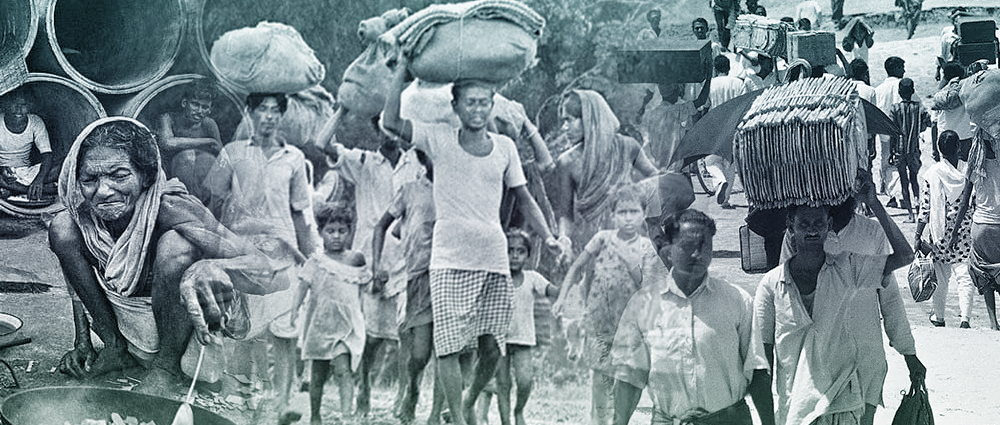
Massive human loss occurred. On the East side, huge civilian casualties occurred. According to a report by Britannica, between 300,000 and 3,000,000 people died during the war and its related atrocities.
Also, thousands of Pakistani men were taken as prisoners of war: about 93,000 in East Pakistan surrendered to Indian forces. These losses had big social and human consequences for Pakistan.
Nishan-e-Haider – How many awarded during the 1971 War?
The Nishan-e-Haider, the highest military award in Pakistan, is given for outstanding acts of bravery. It is usually awarded to people who have sacrificed themselves for the nation’s well being. This extraordinary award, the Nishan-e-Haider, was bestowed upon four soldiers of the Pakistan Army for their extraordinary courage during the 1971 War:
- Major Shabbir Sharif (died on 6 December 1971) – Frontier Force Regiment.
- Major Muhammad Akram (died on 5 December 1971)- Frontier Force Regiment.
- Sowar Muhammad Hussain (died on 10 December 1971) – Armoured Corps.
- Lance Naik Muhammad Mahfuz (died on 17 December 1971) – Punjab Regiment.
- One other person, Pilot Officer Rashid Minhas (Air Force) was honored for the August 1971 incident in which he was hijacked mid-air.
The 1971 War was one of the most challenging and complex wars in which the Indian and Pakistani armed forces fought against each other. The War saw a lot of heroic acts from soldiers, sailors, airmen, and support staff, even if their names are not very popular. The naval gunboat crew members, like PNS Rajshahi and PNS Sylhet in East Pakistan, the aviators and support teams of the Pakistan Air Force conducting dangerous operations, the logistics and medical teams coping with vast refugee movements, and the officers in isolated positions with heavy gunfire, all displayed enormous sacrifices.
Who Won the War?
Determining “who won” the 1971 War is not easy. To the Pakistanis, the loss of their territory meant that they had lost the war, that is, East Pakistan. Along with this, they suffered economically and lost human lives, and the power balance of the region changed in favor of India.
The war had a very negative effect on Pakistan. The country lost its eastern part, which was a significant change in its territory and national map. Heavy economic losses, human sufferings, and the surrender of a large number of troops were also some of the consequences faced by Pakistan.
It is generally accepted that the Indian side and the Bengali nationalists were successful in achieving their goals.
In military jargon, Pakistan was very courageous, but when we consider the issue on national level, the loss of the eastern region, the giving up of many soldiers, the economic devastation, and the human suffering can all be interpreted as a defeat for the national objectives of Pakistan in the war of 1971.
PNS Rajshahi and the Role of the Navy
The Pakistani Navy encountered considerable difficulties at sea during the 1971 conflict. They mainly concentrated on the Army’s operations in East Pakistan by means of such like Operation Barisal to acquire the power of the region. PNS Hangor at sea, on the other hand, sank the Indian frigate INS Khukri and thus achieved a landmark victory; whereas PNS Ghazi was lost during its operation of locating INS Vikrant in the Bay of Bengal.
At the same time, Indian Navy carried out massive missile raids on Karachi as part of Operation Trident, destroying not only ships but also the most important port infrastructure. The final outcome of the naval battle was that Pakistan resorted to a defensive strategy since it was greatly outnumbered and could rely only on the port of Karachi.
The PNS Rajshahi, a miniature patrol vessel put into commission in 1966, contributed to the Pakistan Navy’s activities in East Pakistan. Even though its support was very limited, the river conditions were very rough, and the enemy was heavily pressuring the Navy on the Eastern front during the 1971 War, vessels like PNS Rajshahi still managed to demonstrate Navy’s determination.
You can also watch the full story of PNS Rajshahi in our latest documentary on YouTube.
Conclusion
The war of 1971 marked a significant milestone in the history of South Asia. Pakistan’s loss of East Pakistan, now Bangladesh, had an impact not only on the geographical aspect of the country but also on its mentality.
Though Pakistan did not accomplish its main goals in 1971, the acts of bravery of its military personnel and their experiences continue to be remembered as a part of the country’s shared memory. The conflict also highlights the factors of political legitimacy, national unity, and strategic location as highly critical; no matter how well-equipped the military forces are, they will still encounter major difficulties without those factors.
As you reflect on the 1971 War, remember both the strategic lessons and the human cost that was part of the war that left a newly formed country broken in two due to internal and external pressures. Watch the captivating scenes unfold in “Jhaur – Fall of Dhaka” documentary by us to know all the vivid details.
Frequently Asked Questions
India vs Pakistan War 1971: Who Won?
The winner in the case of India-Pakistan: Who won? was the Bengali liberation side and India, as they got what they wanted (Bangladesh was created), and on the other side, Pakistan not only lost its eastern part, but also had to face drastic social/economic changes, which resulted in a new map of the country.
Who offers documentaries or streaming services with detailed content on the 1971 war?
Yes, there are a number of good documentaries (and doc-series) on the 1971 war (Bangladesh Liberation / Indo-Pak War), available on various platforms. One of the best ones is Jhaur – The Fall of Dhaka, by Rava Documentary Films. You can find small episodes in the form of a Docu-series, as well as the feature-length film of the entire documentary, available on YouTube.
How many Nishan-e-Haider were awarded in 1971 War?
Four Pakistan Army personnel were awarded the Nishan-e-Haider for actions in the 1971 War. They are as follows:
- Major Shabbir Sharif
- Sowar Muhammad Hussain.
- Major Muhammad Akram
- Lance Naik Muhammad Mahfuz
