
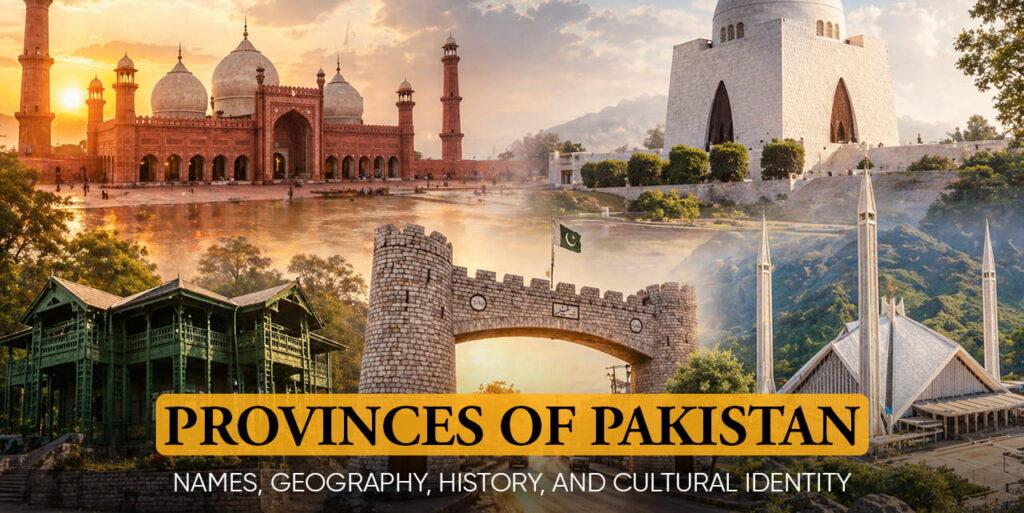
Rawalpindi is Punjab’s military and commercial twin to Islamabad, a city with a very different energy from the planned capital next door, older, louder, and full of bazaars that have operated for centuries.
Sialkot’s global influence far exceeds what its size might suggest. This mid-sized city manufactures a significant share of the world’s hand-stitched footballs, including those used in FIFA World Cups, along with surgical instruments and sporting goods exported across the world.
Multan, in southern Punjab, is known as the City of Saints (Madinat-ul-Auliya). Its landscape of blue-tiled shrines, centuries-old Sufi dargahs, and sweet shops famous for sohan halwa gives it a character entirely distinct from northern Punjab.
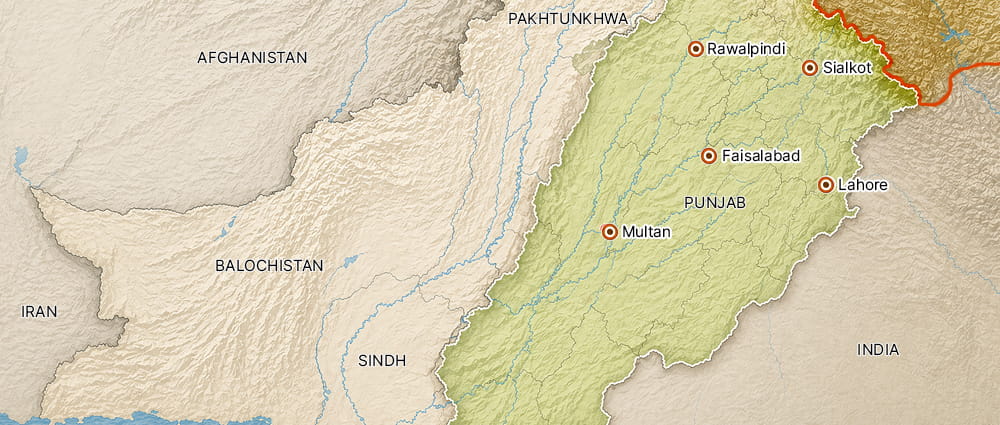
Climate in the Central Province
Punjab’s climate is one of extremes. Summers from May through August are brutally hot, with central and southern Punjab regularly hitting 45°C or above. The monsoon arrives in July and runs through September, bringing storms and brief relief. Winters from December to February bring cold nights across most of the province, with the hill stations of Murree and Nathiagali receiving heavy snowfall. Spring, from March to April, is Punjab at its most beautiful: green fields and vast tracts of bright yellow mustard flowers.
Famous Tourist Places to Visit on Your Next Trip to Punjab
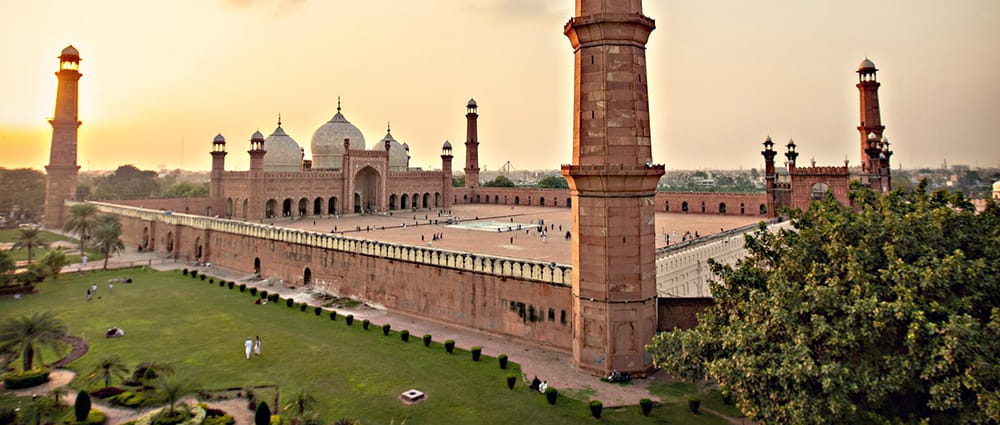
Punjab’s collection of UNESCO World Heritage Sites is remarkable. In Lahore, the Mughal-built Lahore Fort and the Badshahi Mosque, commissioned by Aurangzeb in 1673, stand across from each other as two of the prime examples of Mughal architecture in the world.
Nearby, the Shalimar Gardens offer terraced lawns, fountains, and pavilions built as a paradise on earth. Rohtas Fort near Jhelum, built by Sher Shah Suri in the 16th century, is a masterpiece of military architecture. Taxila, outside Rawalpindi, contains ruins spanning the 6th century BCE to the 5th century CE and was one of the ancient world’s greatest centers of Buddhist scholarship.
In the south, the Derawar Fort in Cholistan stops you mid-breath, a 40-meter-high medieval fort rising from flat desert, its 30 defensive towers visible from miles away.
Economy
Punjab is Pakistan’s economic engine, consistently contributing between 54 to 60 percent of the national GDP. It produces the majority of Pakistan’s wheat, cotton, rice, sugarcane, and maize, supported by one of the largest canal irrigation networks in the world. Industrially, it leads in textiles (Faisalabad), sports goods and surgical instruments (Sialkot), motorcycles and manufacturing (Gujranwala), and food processing. Lahore is an increasingly important hub for IT services and startups.
Language in Punjab
Punjabi is the mother tongue of the majority, but it is not a single uniform language. Its main dialects include Majhi (Lahore and central Punjab), Pothohari (Rawalpindi and the north), and Seraiki (southern Punjab around Multan and Bahawalpur), which many consider a separate language entirely. Urdu serves as the language of education, government, and inter-community communication.
Culture
Punjab’s culture is built on the river and the rhythm of an agricultural society shaped by five rivers and changing seasons.
Sufism runs deep. The shrines of Data Ganj Bakhsh in Lahore and Baba Farid in Pakpattan are living centers of devotion and music that draw millions yearly. Qawwali reached some of its greatest heights in Punjab, culminating in the genius of Nusrat Fateh Ali Khan.
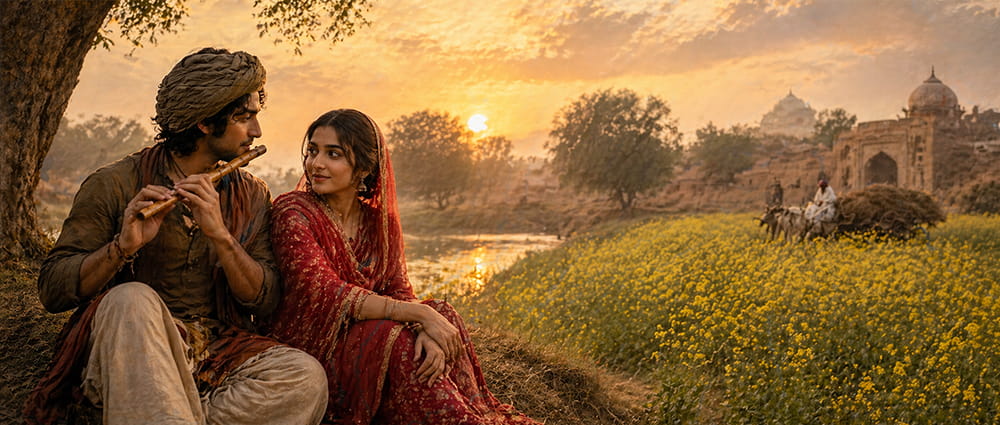
Folk traditions include Bhangra, Basant (kite flying), and Lohri. Punjabi weddings are legendary multi-day celebrations of music, dance, and food. And at the heart of the culture are its great tragic love stories, Heer Ranjha, Sohni Mahiwal, and Mirza Sahiban, retold for centuries in poetry, song, and film.
Famous People
Punjab has produced figures who shaped Pakistan and the world. Allama Iqbal, born in Sialkot, was the philosopher-poet whose vision became the intellectual foundation of Pakistan. Nusrat Fateh Ali Khan from Faisalabad brought qawwali to global audiences and remains one of the most influential voices in South Asian music.
Wasim Akram is widely regarded as the greatest left-arm fast bowler in cricket history. Iqbal Masih, born in Muridke, Punjab, in 1983, rose to international prominence as a child rights activist and a symbol of the fight against child labor. Let’s not forget, Arfa Karim from Faisalabad, who became the world’s youngest Microsoft Certified Professional at age nine.
2. Sindh: The First Civilization and The Last Frontier of Sufism
Sindh is where the story of Pakistan begins. Home to the ancient Indus Valley Civilization and shaped by centuries of trade, migration, and cultural exchange, this is one of the provinces of Pakistan that carries a legacy stretching back thousands of years.
At the same time, Sindh remains the heartland of Sufism in South Asia, where the teachings of saints, poets, and mystics continue to inspire traditions of devotion, tolerance, and spiritual reflection.
Geography and Location
Sindh Pakistan occupies the southeastern corner of Pakistan, stretching from the Thar Desert in the east to the Kirthar Mountains in the west, and from Punjab’s border in the north to the Arabian Sea in the south. At roughly 140,914 square kilometers, it is Pakistan’s third-largest province by area.
The Indus River is Sindh’s spine. East of it lies the Thar Desert, a vast landscape of sand dunes and ancient desert culture. West of it rise the Kirthar Mountains, separating Sindh from Balochistan. Along the coast, the Indus fans into a delta of creeks, mangroves, and fishing villages before meeting the Arabian Sea.
Like all provinces of Pakistan, Sindh is divided into distinct regions: Upper Sindh in the north is the agricultural base and tied to the Indus River; The Middle of Sindh is the provincial heartland; and Lower Sindh, includes Karachi and the delta coast.
Province History
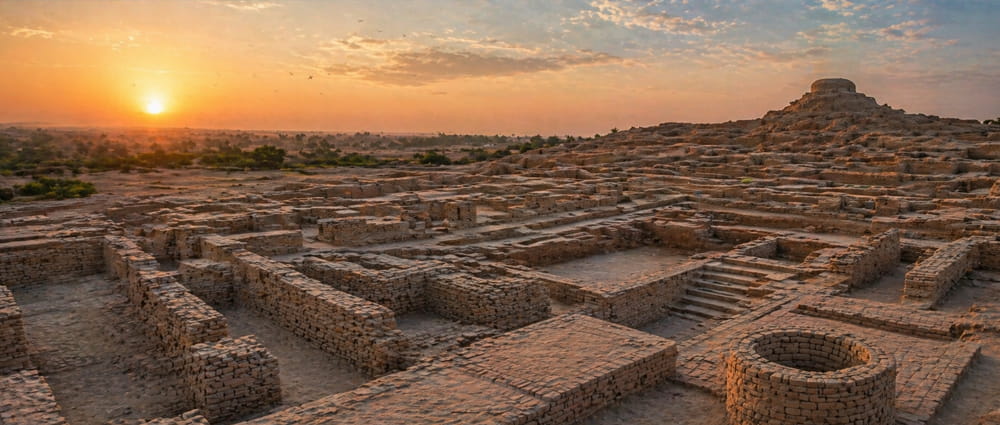
Sindh’s history begins at the very start of South Asian civilization. Mohenjo-daro, built around 2500 BCE in present-day Larkana, was a planned city of 40,000 people, complete with multi-story buildings, sophisticated drainage systems, and organized streets at a time when most of the world still lived in scattered villages. Among its most famous discoveries is the Dancing Girl of Mohenjo Daro, a bronze statuette whose poise and craftsmanship have become enduring symbols of the Indus Valley Civilization’s artistic and cultural sophistication.
After the Indus Valley Civilization declined, Sindh passed through Persian, Greek, and Mauryan rule before the moment that defined its identity forever. In 712 CE, Muhammad bin Qasim conquered Sindh, making it the first part of South Asia to fall under Islamic rule and earning it the name Bab-ul-Islam, the Gateway of Islam.
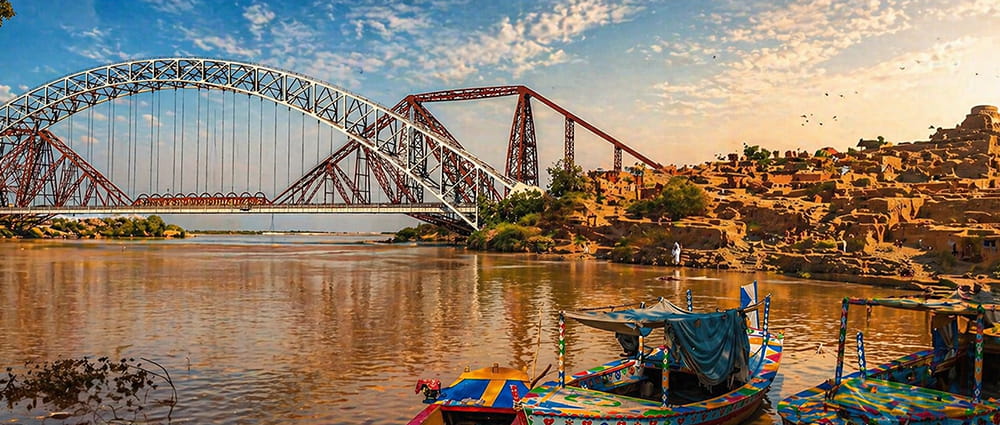
Successive dynasties followed until the British East India Company conquered Sindh in 1843, tying it to the Bombay Presidency, an arrangement widely resented by Sindhis. The colonial era also left behind landmarks such as the Lansdowne Bridge at Sukkur, completed in 1889. Spanning the Indus River, it was one of the greatest engineering achievements of its time and remains an enduring symbol of Sindh’s historical and economic importance. Separation as a distinct province in 1936 was won largely through the advocacy of Muhammad Ali Jinnah.
Partition brought a dramatic demographic shift. As Sindhi Hindus left for India, millions of Urdu-speaking Muhajirs arrived and settled in Karachi and Hyderabad, creating tensions that have shaped Sindhi politics ever since.
Major Cities of Sindh
Karachi stands as the largest city in Sindh and in Pakistan. With a population exceeding 20.3 million people, it is one of the most densely populated cities on earth, a port city that handles the majority of Pakistan’s trade, and a financial center that generates a significant share of national tax revenue. It is also the most ethnically diverse city in Pakistan, a place where Sindhis, Muhajirs, Pashtuns, Punjabis, Baloch, Hazaras, and dozens of other communities live side by side.
Hyderabad, connected to Karachi by highway, was once the capital of Sindh and remains its second city, a center of trade, education, and craftsmanship, particularly famous for its glass bangles, Sindhi ajrak fabric, and varnished woodwork.
Sukkur in upper Sindh is one of the province’s oldest cities, positioned at a dramatic crossing point on the Indus River. It is home to the iconic Lansdowne Bridge, completed in 1889, which was considered a remarkable engineering achievement of the British era and remains one of Pakistan’s most recognizable historic bridges.
The Sukkur Barrage, completed in 1932, also commands an enormous irrigation network that transformed millions of acres of Sindh into productive farmland.
Larkana is the ancestral home of the Bhutto family and sits close to Mohenjo-daro, the discovery place of the famous Dancing Girl statuette, making it a city where ancient history and modern political dynasties coexist in a peculiarly Sindhi way.
Thatta, south of Karachi, was once the capital of Sindh under the Samma and Mughal dynasties. Its Makli Hill necropolis, one of the world’s largest funerary sites, contains the graves of Sindhi rulers, saints, and scholars spanning the 14th to 18th centuries.
Climate in Sindh
Sindh experiences predominantly hot and arid climates in Pakistan. Interior Sindh, around Larkana, Jacobabad, and Sukkur, sees temperatures routinely exceeding 48°C in May and June. Jacobabad is documented as one of the few places on earth that crosses the wet-bulb temperature thresholds.
Karachi’s coast is far more tolerable, moderated by the Arabian Sea breezes, with mild winters that locals consider cold at 18°C. The monsoon sweeps through interior Sindh from July to September, bringing much-needed rainfall to many areas. The Indus River and its associated irrigation systems play a vital role in supporting agriculture and sustaining communities across Sindh’s diverse landscapes.
Famous Tourist Places to Visit in Sindh
Mohenjo-daro near Larkana is Sindh’s crown jewel, a UNESCO World Heritage Site and one of the most significant archaeological sites in the world. Walking its 4,500-year-old streets of wells and public buildings in the early morning is a surreal and humbling experience.
Makli Hill near Thatta, also a UNESCO site, is a 10-square-kilometer necropolis containing thousands of decorated tombs and one of the largest funerary monuments in the world. Keenjhar Lake in Thatta district is Sindh’s largest freshwater lake and the setting of the beloved legend of Noori, a fisher-girl who became a queen. Kirthar National Park protects wild sheep, ibex, leopards, and wolves in the mountains west of Karachi.
The shrines of Sufi saints, particularly Shah Abdul Latif Bhittai in Bhit Shah, draw enormous pilgrimage gatherings during annual Urs festivals.
Economy
Sindh has Pakistan’s second-largest provincial economy, but not everyone shares this wealth equally. Karachi generates far more than its fair share of both provincial and national revenue through its ports, financial institutions, the Pakistan Stock Exchange, and the home base of the country’s biggest banks and businesses.
Rural Sindh tells a different story. Agriculture dominates, producing cotton, rice, sugarcane, wheat, and mangoes. The Sindhri mango is considered among the finest in the world. The province also holds significant natural gas reserves that have historically supplied much of Pakistan’s domestic energy, and its coastline and Indus Delta support hundreds of thousands of fishing families.
Language
Sindhi is one of Pakistan’s oldest literary languages, with a writing history going back hundreds of years, and is recognized as a regional language in the constitution. Urdu is widely spoken in Karachi and Hyderabad, reflecting the Muhajir communities who settled after Partition.
In the Thar Desert, communities on the eastern edge of the province speak Thari, a language similar to Rajasthani.
Culture in Sindh
Sindhi culture is inseparable from Sufism. The shrines of Shah Abdul Latif Bhittai, Lal Shahbaz Qalandar in Sehwan, and Abdullah Shah Ghazi in Karachi are not just religious sites but living community centers, musical venues, and expressions of a tolerant, mystical Islam that has defined Sindh for over a thousand years.
The annual Urs festivals bring thousands of devotees together in nights of devotional music, including the powerful dhamaal dance at Lal Shahbaz Qalandar’s shrine, one of the most extraordinary cultural events in Pakistan.The annual Urs festivals bring thousands of devotees together in nights of devotional music, including the powerful dhamaal dance at Lal Shahbaz Qalandar’s shrine, one of the most extraordinary cultural events in Pakistan. Sindh is also home to the beloved folk songs and dances like Ho Jamalo, performed at celebrations, weddings, and community gatherings, where its infectious rhythm embodies the province’s spirit of joy, resilience, and collective identity.
Sindhi handicrafts, particularly ajrak (block-printed fabric in deep indigo and red) and the embroidered Sindhi topi, are symbols of identity worn with pride across the province. At the core of Sindhi culture is the poetry of Shah Abdul Latif Bhittai, whose 18th-century verses about legendary heroines Sassi, Sohni, and Marui are still sung at shrines and recited in homes. His poetry is as alive today as it was centuries ago.
Famous People
Some of Pakistan’s greatest personalities have come from Sindh. Muhammad Ali Jinnah, the founder of Pakistan, was born in Karachi. Zulfikar Ali Bhutto, Pakistan’s first elected Prime Minister, was born in Larkana, as was his daughter Benazir Bhutto, twice Prime Minister and the first woman to lead a Muslim-majority nation.
Famous poet and feminist Fahmida Riaz came from Hyderabad. Veteran diplomat, journalist, and author Zafar Hilaly, known for his contributions to Pakistan’s foreign policy discourse, also traces his roots to Sindh. And Abida Parveen, also from Larkana, is considered by many the greatest living voice of Sufi classical music.
3. Khyber Pakhtunkhwa: The Gateway to Asia
Khyber Pakhtunkhwa is one of the Provices of Pakistan with the most historically significance. Located along important routes connecting South Asia with Central Asia, it has welcomed traders, travelers, and armies for centuries. This strategic location has played a major role in shaping the province’s history, culture, and identity.
Geography and Location
Khyber Pakhtunkhwa, or KPK, occupies the northwestern corner of Pakistan. Out of all the Provinces of Pakistan it is the smallest province by land area at roughly 101,741 square kilometers, but it contains more diverse and impressive landscapes than most regions of the same size.
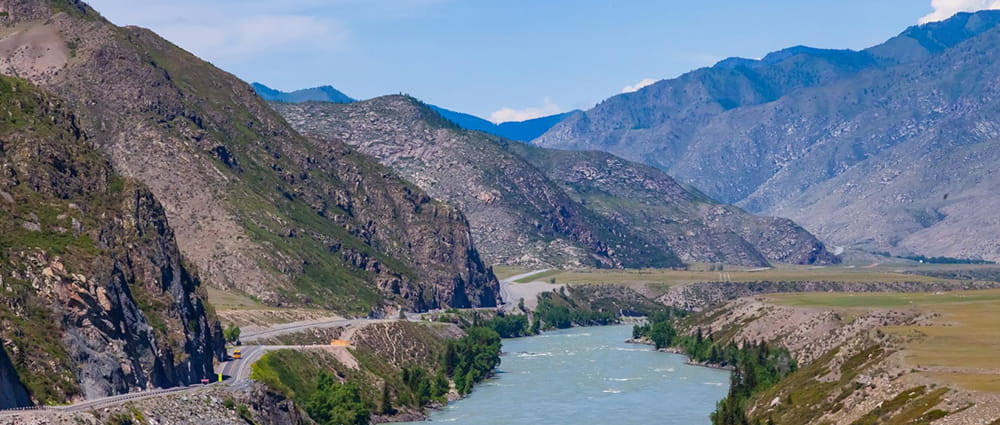
It stretches from the flat, hot Peshawar Valley in the south up into the soaring Hindu Kush mountains in the north, taking in the green valleys of Swat and Kaghan, alpine meadows of Chitral, and forested hillsides that regularly draw Switzerland comparisons. To the west lies Afghanistan, connected through the historic Khyber Pass, the main corridor between Central Asia and South Asia for thousands of years.
Since 2018, this one of the provinces of Pakistan has grown significantly, following the incorporation of the Federally Administered Tribal Areas (FATA) into KPK, largely increasing both its size and the number of areas it manages.
Provincial History of Khyber Pakhtunkhwa
KPK’s history is largely the history of the Khyber Pass. The Persians crossed here. Alexander the Great fought through the Swat Valley. The Gandhara civilization developed and expanded in what is now northern Pakistan and Afghanistan, lasting from around 500 BCE to the early 2nd millennium CE.
Under various rulers, including the Kushans, it produced some of the ancient world’s most beautiful religious sculptures, including the first human representations of the Buddha.
The Pashtuns developed Pashtunwali, a code of honor, hospitality, and justice passed down through generations. The British kept the tribal areas partly independent under the Frontier Crimes Regulations, an arrangement Pakistan maintained until FATA merged into KPK in 2018.
When the Soviet Union invaded Afghanistan in 1979, the Mujahideen rose in resistance, drawing KPK into decades of conflict. The human cost was enormous, but KPK has shown a remarkable ability to recover.
Major Cities
Peshawar is one of South Asia’s oldest continuously inhabited cities, founded over 2,000 years ago. Today, it is a city of chaotic energy, where bazaars overflow with traders and the famous Qissa Khwani Bazaar, the Street of Storytellers, has been a meeting point for caravans and merchants for centuries.
Mardan, the second largest city, sits close to the ruins of Pushkalavati, the ancient capital of Gandhara, and is also home to one of the largest sugar refineries on the Indian subcontinent. Abbottabad in the Hazara region is known for its pine-covered hills and military academy. Swat attracts visitors to its green mountain scenery, trout streams, and Buddhist ruins.
Climate in KPK
Khyber Pakhtunkhwa experiences a diverse range of climates, reflecting its varied geography. Peshawar and the surrounding valleys enjoy warm summers, mild winters, and seasonal monsoon rains, while the northern regions of Swat, Kaghan, and Chitral are known for their cool mountain weather, lush green landscapes, alpine meadows, and snow-capped peaks.
These breathtaking natural surroundings attract millions of tourists each year, who travel from across Pakistan and around the world to experience the province’s scenic valleys, crystal-clear lakes, hiking trails, and some of the country’s most spectacular mountain views.
Famous Tourist Places in the Breathtaking Landscapes of KPK
KPK has become one of Pakistan’s most exciting tourism destinations, with the government investing significantly in promoting its natural beauty.
Swat Valley leads the way, a lush mountain valley with emerald rivers, wildflower meadows, and Buddhist ruins, including the Butkara Stupa. Lake Saif-ul-Malook in the Kaghan Valley is famous for its crystal clear water and local folklore, attracting large numbers of visitors in summer. Kumrat Valley in Upper Dir offers thick forests and crystal rivers that feel completely natural and unspoiled. Malam Jabba in Swat is Pakistan’s only ski resort. Shandur Pass at 3,700 meters hosts the world’s highest polo tournament every summer, where teams from Chitral and Gilgit face off at the roof of the world.
In Peshawar, the Bala Hisar Fort and the Mohabbat Khan Mosque are essential stops. The Khyber Pass can be visited with the required permits. The Gandhara Heritage Trail connects archaeological sites across KPK, including the remarkably well preserved Takht-i-Bahi ancient Buddhist monastery, taking visitors through the ruins of a civilization most of the world knows almost nothing about.
Economy
KPK contributes roughly around 10 percent of Pakistan’s GDP, with its economy transitioning from agriculture to services, manufacturing, and resource extraction. Its valleys produce wheat, maize, tobacco, and exceptional fruit. The province also has strong export potential in gemstones, marble, granite, traditional handicrafts, and high quality honey. Its location also supports trade with Afghanistan and Central Asia.
The tribal areas also carry a unique, if unofficial, economic tradition: the workshops of Darra Adam Khel have been hand-crafting weapons for over a century.
Language of the Northern Province
Pashto is the dominant language, spoken by roughly 80 percent of the population, and carries a rich oral tradition including the landay, a two-line folk poem traditionally composed by women and one of the oldest living literary forms in the region.
Hindko is spoken in the Peshawar Valley and Hazara region, Khowar in Chitral, and Kohistani languages in the upper valleys. Urdu serves as the inter-community language in urban and official contexts.
Culture in Khyber Pakhtunkhwa
KPK’s culture is built on Pashtunwali, an ancient code governing every aspect of Pashtun social life. Its pillars are melmastia (hospitality), nang (honor), and badal (justice or revenge). The Jirga, a council of elders settling disputes through consensus, still functions alongside formal courts in many communities.
(Cultural Images of Khyber Pakhtunkhwa)
Pashtun hospitality is no formality. Guests are fed with absolute insistence regardless of whether they arrived unannounced or whether the host can easily afford it. No guest leaves hungry.
Attan, the traditional Pashtun circle dance performed at weddings and celebrations, is one of Pakistan’s most visually spectacular folk traditions. The rabab, folk songs, and the storytelling culture of Peshawar’s Qissa Khwani Bazaar reflect a province that has always been a meeting point of Central and South Asian cultures.
KPK cuisine is hearty and meat-forward: chapli kebab, Peshawari karahi, kabuli pulao, and the famous Peshawari ice cream, a dense reduced-milk preparation unlike anything else in Pakistan.
Famous People Who Hail from KPK
Some of Pakistan’s most well-known figures have come from Khyber Pakhtunkhwa. Abdul Ghaffar Khan, widely remembered as Bacha Khan, led a nonviolent movement against British colonialism.
In sports, Jahangir Khan and Jansher Khan from Peshawar are considered two of the greatest squash players in history, while Shahid Afridi and Muhammad Rizwan are celebrated cricket stars from the province. In the arts, Peshawar gave the world legendary Bollywood actors Dilip Kumar and Raj Kapoor.
CPEC has made Balochistan more geopolitically significant than ever. Gwadar port is CPEC’s southern terminal and the centerpiece of Chinese investment in Pakistan. Whether it delivers genuine development to Balochistan’s people remains one of the most consequential questions in Pakistani politics.
Major Cities in the Largest Province of Pakistan
Quetta, the provincial capital, sits at over 1,600 meters in a mountain valley surrounded by dramatic ridges. It is a city of fruit orchards, Afghan refugees, military cantonments, and bazaars full of dried fruits and handwoven carpets, pleasantly cool in summer and cold enough for regular snowfall in winter.
Turbat is the main city of the southern Makran region.
Khuzdar serves as the hub for central Balochistan’s mining areas.
Gwadar on the Makran Coast has transformed from a quiet fishing town into a major development project, though investment and construction have moved considerably faster than local economic benefit.
Balochistan’s Climate
The climate in Balochistan varies dramatically with altitude. Quetta and the central highlands have four genuine seasons, with cold winters, moderate summers, and autumn fruit harvests. The Makran Coast tells a different story entirely. Turbat has recorded temperatures above 53°C, among the highest ever reliably measured on earth, and the interior deserts of Chagai and Kharan receive almost no rainfall year-round.
Balochistan receives no meaningful monsoon. Its water comes primarily from karez, an ancient Persian system of underground channels that brings groundwater from the mountains to villages in the plains below, still in use today.
Famous Tourist Places if You Want to Tour Balochistan
Balochistan is Pakistan’s great undiscovered tourist destination, a province of spectacular landscapes that very few visitors have explored.
Hingol National Park, Pakistan’s largest natural reserve, covers around 1,650 square kilometers along the Makran Coast and contains the naturally carved Princess of Hope rock formation, mud volcanoes, the Hindu pilgrimage temple of Hinglaj Mata, and the beautiful Kund Malir Beach. Ziarat, north of Quetta, is a hill station surrounded by one of the world’s largest juniper forests, some trees thousands of years old, and home to the preserved residency where Jinnah spent his final weeks.
Moola Chotok in Khuzdar is a gorge of turquoise pools and waterfalls hidden in desert mountains that stops visitors mid-sentence. Pir Ghaib in the Bolan district features waterfalls dropping into a palm-lined valley.
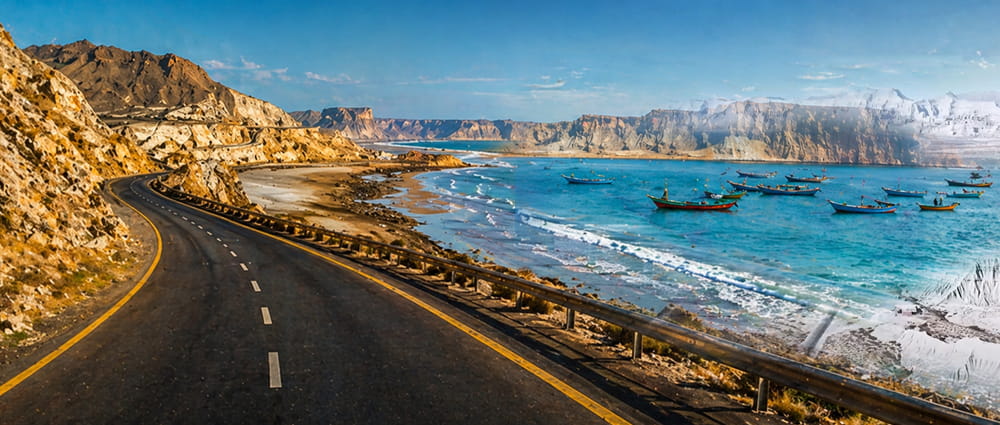
The Makran Coastal Highway from Karachi to Gwadar passes through some of the most dramatic coastal scenery in Asia, opening a coastline to travelers that was largely inaccessible before 2004.
What the Province Produces and Contributes Towards the Economy
Balochistan’s economy is a paradox. It is arguably Pakistan’s most resource-rich province, yet it has the lowest Human Development Index and the highest rates of poverty of any province.
Natural gas from Sui has powered Pakistan’s homes and factories for decades. The Reko Diq copper and gold deposit, one of the largest of its kind in the world, is now moving toward development after a long international legal dispute. The Saindak copper-gold project has been operational for years. Highland agriculture around Quetta and Mastung produces exceptional apples, pomegranates, and raisins celebrated across Pakistan. Livestock and sheep herding remain central to the rural economy, and fishing along the Makran Coast supports tens of thousands of families.
Gwadar port is projected to transform Balochistan’s economic position dramatically once fully operational, though that potential has been promised for so long that local communities watch new announcements with understandable caution.
Language
Balochi is the most widely spoken language, used across the southern and western regions. Brahui, an old native language unrelated to the Indo-Iranian languages around it, is spoken in the central highlands. Pashto dominates the northern areas and much of Quetta city. Hazaragi, a dialect of Dari, is spoken by the Hazara community concentrated in Quetta.
The Rich Culture of Balochistan
Balochi culture is tribal and nomadic in its roots, centered on poetry, music, hospitality, and honor. Traditional music features the sorud (a bowed string instrument) and tambooro (lute), with vocal styles that are deeply emotional, often poetic laments about separation and the homeland.
Baloch embroidery, with intricate geometric patterns in vivid colors, is one of Pakistan’s great handicraft traditions and is increasingly recognized internationally. At the heart of the literary culture sits the romantic epic Hani and Sheh Mureed by the legendary 19th-century poet Shah Abdul Karim Baloch, the Balochi equivalent of Heer Ranjha, a story of impossible love sung for generations.
The Sibi Mela, one of Pakistan’s largest annual agricultural festivals, brings together livestock shows, folk music, traditional sports, and traders from across the province and beyond.
Famous People
Muhammad Ali Jinnah lived his final weeks in Ziarat before passing away in Quetta, giving Balochistan an emotional connection to the founder of Pakistan. Mir Chakar Khan Rind, the legendary 15th-century Baloch chieftain and warrior-poet, remains the most celebrated figure in Baloch historical memory, his wars and verses still discussed today.
Contemporary novelist Mirza Hamid Baig has brought Balochi themes into Urdu fiction, and athlete Muhammad Inam Butt has represented Pakistan in international body building competitions.
Beyond the Four Provinces: Pakistan’s Territories
Islamabad Capital Territory (ICT)
Islamabad was not always Pakistan’s capital. Until the 1960s, Karachi held that role. The decision to build a new capital from scratch in the Margalla Hills reflected a desire for a neutral, centrally located seat of government belonging to no single province or city.
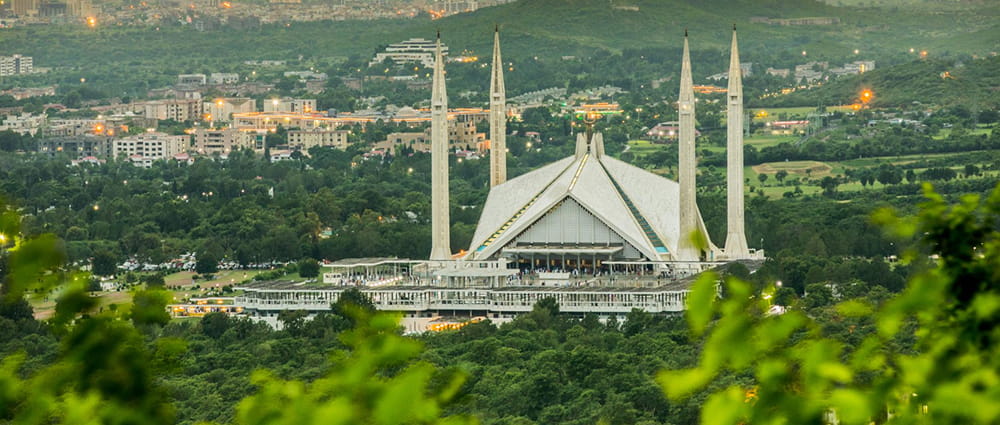
Carved out of Punjab and handed to the federal administration, the Islamabad Capital Territory is home to approximately 2.4 million people. It is Pakistan’s planned, green, and comparatively orderly face, a city of broad avenues, embassies, ministries, and universities, with the Faisal Mosque at the base of the Margalla Hills as its defining landmark.
ICT residents elect National Assembly members but has no Provincial Assembly of its own.
Azad Jammu & Kashmir (AJK)
Azad Kashmir is Pakistan’s self-governing territory in the northwest, administering the western portion of the broader Kashmir region. Its political status is tied to one of South Asia’s most defining unresolved disputes, a conflict that has brought India and Pakistan to war three times. It has its own president, prime minister, legislative assembly, and supreme court, but foreign policy and defense remain with Islamabad.
Geographically, it is a place of extraordinary natural beauty. The Neelum Valley, the deep valleys of the Jhelum River, and the mountain town of Muzaffarabad are among the most scenic destinations in the entire subcontinent.
Gilgit-Baltistan (GB)
Gilgit-Baltistan is where Pakistan’s geography reaches its most extreme and breathtaking. Three of the world’s great mountain ranges, the Himalayas, the Karakoram, and the Hindu Kush, converge here in a space small enough to drive across in a day.
Four of the world’s fourteen eight-thousand-meter peaks are in Gilgit-Baltistan, including K2 (8,611 m), the second-highest and arguably most dangerous mountain on earth, and Nanga Parbat (8,126 m). The Baltoro Glacier ranks among the longest glaciers found anywhere outside the polar regions. The Hunza Valley, with its Baltit Fort, apricot orchards, and views of Rakaposhi, is one of Pakistan’s most captured landscapes.
Gilgit-Baltistan has its own assembly and government, but its constitutional relationship with Pakistan remains unresolved, partly because full provincial integration would complicate Pakistan’s position in the Kashmir dispute. Its people are culturally distinct, speaking Shina, Balti, Burushaski, and Khowar, and following a mix of Sunni, Shia, and Ismaili traditions.
How Geography Shaped Pakistan’s Provinces
Geography has played a defining role in shaping the Provinces of Pakistan. Each region reflects how landscapes influenced the development of the Provinces of Pakistan.
Punjab’s rivers created Punjab’s culture. Five rivers flooding across an alluvial plain created the most fertile soil in South Asia, which demanded organized agriculture, which required canal systems and administration, which created the dense, populous, economically dominant province that Punjab has always been.
The Indus created Sindh. Without it, Sindh would be a desert from the Kirthar Mountains to the Indian border. Mohenjo-daro was built because of the Indus. Karachi grew because the Indus Delta made the coast navigable. The province’s entire geographic logic is an expression of a single river.
The Khyber Pass made KPK what it is. Every army, trader, and idea moving between Central Asia and South Asia had to pass through this province. KPK’s culture of fierce independence developed partly as a response to centuries of being other people’s corridor.
Balochistan’s vast plateau and rugged mountains shaped a different path. Its immense size, strategic coastline, and rich mineral resources have given it an importance that extends far beyond its population. The province is also home to Chagai, where Pakistan conducted its nuclear tests in 1998, a milestone that established the country as a nuclear-armed state and highlighted Balochistan’s enduring strategic significance.
Pakistan is, in this sense, a geographic story made visible. Its provinces are what happens when different landscapes shape different peoples over thousands of years, and a single nation draws lines around all of them. Together, they form a country whose history, culture, economy, and even its nuclear program have been profoundly influenced by geography.
Conclusion
Pakistan’s provinces are four different answers to what human civilization looks like when it grows from a particular landscape. Punjab grew from river water and alluvial soil into a dense, productive heartland. Sindh grew from one of the world’s oldest urban civilizations into a province where Sufi shrines and modern skylines stand within miles of each other.
Khyber Pakhtunkhwa grew from an ancient mountain corridor into a land where rich traditions, resilience, and breathtaking natural beauty define daily life. Balochistan grew from some of humanity’s earliest settlements into a vast province of immense cultural, geographic, and strategic significance. Together, they form the Provinces of Pakistan, representing both diversity and unity within a single nation.
Understanding the Provinces of Pakistan is essential to understanding Pakistan itself. Through its documentaries and storytelling initiatives, Rava Documentary Films continues to explore these histories, cultures, and landscapes, bringing to light the people and places that have shaped Pakistan’s past and continue to define its future.