
The history of the Pakistan Navy is closely connected to the changing security needs of the country. In 1971, its eastern forces included small gunboats operating in the rivers and coastal waters of East Pakistan. More than five decades later, the fleet includes frigates, corvettes, submarines, and other vessels with modern sensors, weapons, and communication systems.
The changes come through war, geography, new technology, and the country’s changing maritime needs. The 1971 conflict exposes limits in the forces operating in East Pakistan. In the years that follow, Pakistan adds new submarines, surface vessels, and other naval capabilities.
Today, the Pakistan Navy protects shipping and monitors activity at sea while fulfilling its defense roles. It also helps with maritime security operations and collaborates with other organizations when necessary. The fleet has changed a lot over the years, from the gunboats used in 1971 to the modern Hangor-class submarines.
Key Insights
- Small gunboats played an important role in river and coastal operations in East Pakistan during 1971.
- The geographical separation of East Pakistan created major challenges for naval operations and support.
- The experience of 1971 was followed by greater emphasis on submarine and surface-fleet capabilities.
- Pakistan Navy ships developed from smaller patrol vessels into modern frigates, corvettes, submarines, and support vessels.
- Radar, sonar, missiles, communications, and other technologies changed how naval forces operate.
- China, Türkiye, and Pakistan have each contributed to different parts of the Navy’s modernization.
- Maritime security and protection of shipping have become important parts of the Navy’s wider responsibilities.
- Pakistan’s location on the Arabian Sea connects its naval responsibilities with shipping, ports, and the wider Indian Ocean activity.
What We Will Cover
- The Pakistan Navy before and during the 1971 war.
- PNS Rajshahi and the role of gunboats in East Pakistan.
- The naval challenges that emerged during the 1971 conflict.
- The development of Pakistan Navy submarines after 1971.
- The evolution of Pakistan Navy ships, frigates, and modern warships.
- How technology changes naval operations.
- China’s and Türkiye’s contribution to naval modernization.
- The Navy’s role in maritime security and protection of shipping.
- Pakistan’s position in the Arabian Sea and wider Indian Ocean.
- How the Pakistan Navy has changed from 1971 to the present.
The Pakistan Navy After Independence
When Pakistan became independent in 1947, its naval force was small, and its resources were limited. Karachi served as the main naval base, with few ships, limited facilities, and a small number of trained personnel.
In the 1950s and 1960s, the Navy got more ships and better facilities. Some ships worked on operations at sea, while smaller boats operated near the coast and in shallow waters. The Navy needed different types of vessels for different waters around Pakistan.
Pakistan’s maritime environment was not limited to open-sea operations. Coastal areas, rivers, ports, and approaches to Karachi all required different types of vessels.
By the 1960s, Pakistan had acquired several gunboats for coastal and river operations. These smaller vessels could move through areas where larger warships faced greater limitations, and PNS Rajshahi was among them.
Pakistan Navy During the 1971 War
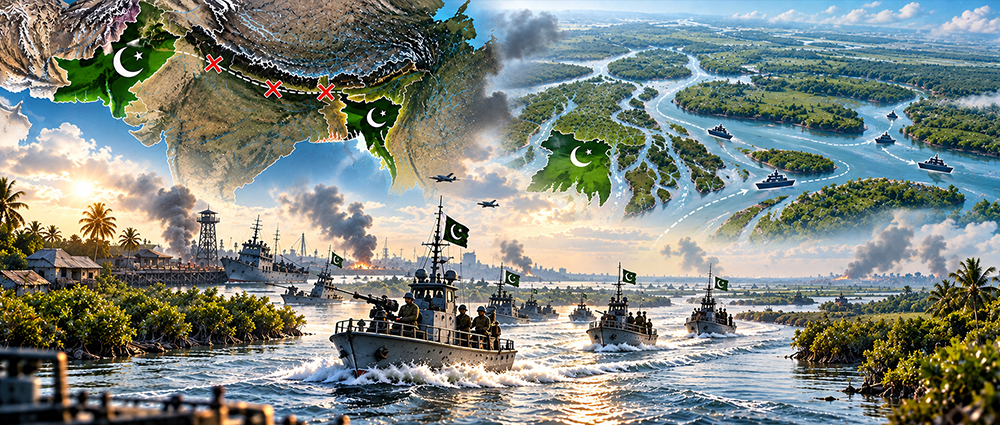
The 1971 war created a very different operating environment for the Pakistan Navy. Naval units in East Pakistan were separated from the main force in West Pakistan, while the region itself had an extensive network of rivers, waterways, and coastal areas.
For small vessels, these waterways provided routes for patrols and movement. Some of the boats operating in the region included:
- PNS Rajshahi
- PNS Jessore
- PNS Comilla
- PNS Sylhet
Their size was important. A small gunboat could move through shallow water and narrow channels more easily than a larger warship. The vessels were used for patrols, transport, security duties, and other operations around the rivers and coast.
As the conflict developed, however, these routine duties became part of a wider military situation.
From Patrol Duties to Wartime Operations
During the 1971 India-Pakistan war, naval units in East Pakistan moved from normal patrol duties into military operations. Attacks damaged facilities and disrupted communications, making it harder for vessels to operate and coordinate their activities.
Limited Support from West Pakistan
The geographical separation of East Pakistan created another problem. The two wings of the country were separated by Indian territory, making it difficult to move ships, supplies, personnel, and reinforcements between them.
The naval units in East Pakistan therefore had limited access to support from the main naval force in West Pakistan.
Challenges of the Local Geography
The region itself presented additional challenges. Rivers, narrow channels, shallow coastal waters, and difficult communications affected how vessels could move and operate.
These conditions made smaller craft useful for some local duties, but they also limited the types of naval operations that could be conducted.
Why Geography Mattered
The experience of 1971 shows why geography cannot be separated from naval operations. The vessels were operating in a theatre that was already difficult to support, while the conflict made movement and communication even harder.
The Limits of Gunboats
Their ability to move through shallow water made gunboats useful for local operations. At the same time, they had fewer weapons and less protection than larger warships, leaving them more exposed during attacks.
The experience also highlighted the importance of information. Radar, reconnaissance, communications, maritime patrol aircraft, and intelligence can help naval units understand what is happening around them and coordinate their response.
The limitations faced by the naval force in East Pakistan formed part of a much larger lesson about the capabilities needed for future naval operations.
From Gunboats to Pakistan Navy Submarines
The story of Pakistan’s naval development does not end with the gunboats of 1971. The vessels used in East Pakistan belonged to a very different period of naval operations, when smaller boats were needed to move through rivers and shallow coastal waters.
PNS Rajshahi and the Gunboats of 1971
PNS Rajshahi was one of the small vessels that operated in East Pakistan during the 1971 war. Along with other gunboats, it was suited to the region’s rivers and coastal waterways, where larger warships could face difficulties.
The story of PNS Rajshahi also provides a closer look at naval operations during the conflict. Its movements and activities during 1971 offer a useful example of how small gunboats were used in the rivers and coastal waters of East Pakistan.
The boats were used to carried troops and supplies and to patrol the rivers and nearby coastal areas. Their work became harder when attacks damaged facilities and communications were disrupted.
They could reach shallow areas that larger ships could not, but their smaller size meant fewer weapons and less protection. This made them less suited to fighting larger ships or dealing with attacks from the air.
The Growing Importance of Submarines
After 1971, submarines gained a larger role in Pakistan’s naval planning. Their ability to remain underwater gave the Navy a capability that surface vessels could not provide in the same way.
Staying underwater allows a submarine to observe activity without constantly showing its position. This became an important part of Pakistan’s naval capabilities after 1971.
The development of Pakistan Navy submarines therefore represents an important change from the small gunboats that operated in East Pakistan. The Navy was moving towards a fleet with different platforms, wider operational capabilities, and more advanced technology.
One of the most recognized names in this history is Hangor.
The Legacy of PNS/M Hangor
PNS/M Hangor attacked an Indian naval vessel during the 1971 war. The event became an important part of the submarine’s history and demonstrated the role an underwater platform could play during a conflict.
The name Hangor later became associated with a new generation of Pakistani submarines. The modern Hangor-class submarines use systems that are very different from those available to the original submarine. Their sensors, weapons, and underwater capabilities reflect the development of naval technology over several decades.
The Hangor-class program includes eight submarines, with four being built in China and four in Pakistan. The first submarine, PNS/M Hangor, was commissioned in Sanya, China, on April 30, 2026.
The program also shows that modern naval development is not only about acquiring ships. It involves construction, engineering, technology transfer, training, and the ability to maintain complex systems.
The Growth of Pakistan Navy Ships
Submarines are only one part of the modern fleet. Over the decades, Pakistan also expanded its surface fleet with vessels designed for different roles.
Frigates and other major warships support larger naval operations, while corvettes and patrol vessels can perform duties closer to the coast. Support ships provide supplies and other assistance to vessels operating at sea.
Modern Pakistan Navy ships also have systems that allow crews to detect, track, communicate, and respond to activity around them.
Pakistan Navy Frigates
Frigates are designed to perform several roles within a fleet. They can support surface warfare, air defense, escort operations, surveillance, and maritime security.
Pakistan Navy frigates therefore provide a combination of endurance, sensors, weapons, and communications. Their role is broader than that of the small gunboats used for riverine operations in 1971.
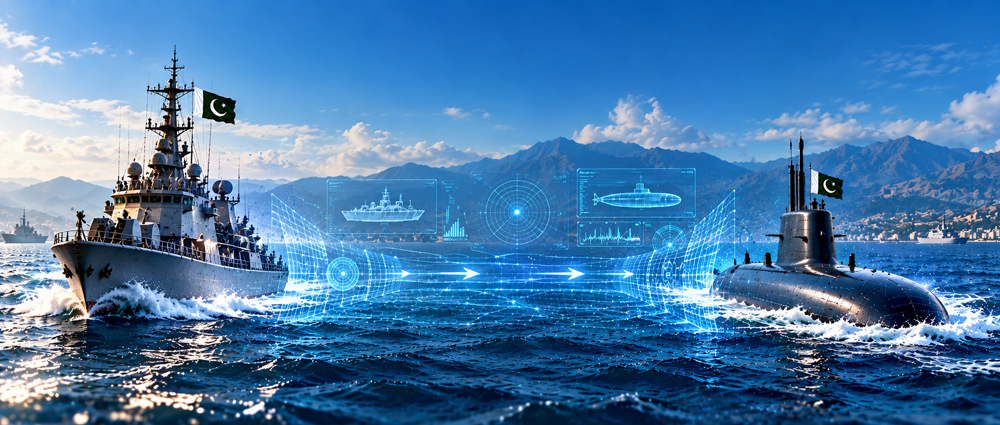
The change is not simply one of size. It is a change in what a naval vessel can see, how far it can operate, how it communicates with other forces, and what types of threats it can respond to.
Modern Pakistan Navy Warships
Modern warships rely on several systems working together.
Radar and other sensors help crews detect and track activity. Missiles provide longer-range engagement options, while electronic warfare systems can detect or disrupt electronic signals. Secure communications allow ships, aircraft, submarines, and command centers to exchange information.
These capabilities create a very different operating environment from the one faced by small patrol boats in 1971.
How Naval Technology Has Changed
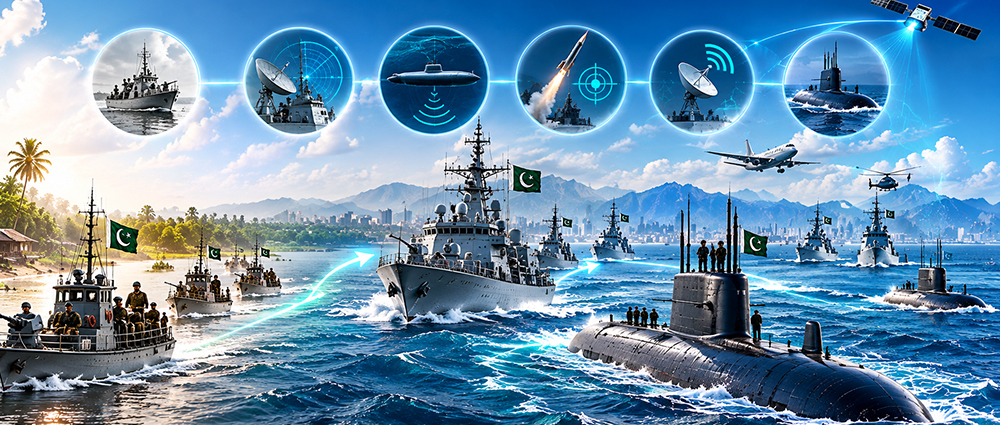
The development of the Pakistan Navy cannot be understood only by looking at the number of ships in the fleet. The technology inside those vessels has also changed how naval operations are conducted.
Radar and Surveillance
Crews once relied mainly on their own observation and simple communication equipment. Radar now gives ships a better view of what is happening around them and helps track vessels from a greater distance.
Sonar and Underwater Operations
Underwater operations have changed as well. Sonar allows naval forces to detect and track objects beneath the water, giving submarines and surface ships another way to understand what is happening around them.
Missiles and Air Defense
Missiles have also changed surface warfare. A modern naval vessel can engage targets at much greater distances than a small patrol craft could, while air-defense systems protect against different types of threats.
Electronic Warfare and Communications
Electronic systems help crews detect signals and keep track of activity at sea. Secure communications also allow ships to stay in contact with other naval units.
Advances in Submarine Technology
Air-independent propulsion has changed how conventional submarines operate. The system allows them to remain underwater for longer, which gives them more time to carry out patrol and surveillance tasks.
International Partnerships and Local Shipbuilding
The development of the Pakistan Navy after 1971 involved more than acquiring new vessels. Foreign partnerships, technology transfer, and local shipbuilding have all contributed to the growth of the fleet.
China’s Role in Naval Development
Pakistan and China have worked together on the Hangor-class submarine program. Eight submarines are part of the program, with four being built in China and four at Karachi Shipyard & Engineering Works. PNS/M Hangor, the first of the class, was commissioned in Sanya on April 30, 2026.
Pakistan has also received four Tughril-class frigates from China. These ships add larger surface platforms with modern sensors, weapons, and combat systems.
Türkiye and Modern Surface Ships
Türkiye has supported Pakistan’s surface-fleet development through the MILGEM, or Babur-class, corvette program. Four corvettes are being built, with two in Türkiye and two at Karachi Shipyard & Engineering Works.
The program includes technology and construction know-how, while local production gives Pakistani shipbuilders experience with modern naval vessels.
Pakistan, Saudi Arabia, and Türkiye
Pakistan, Saudi Arabia, and Türkiye signed the Makkah Joint Defense Agreement on August 7, 2026. The agreement provides for wider defense cooperation and states that an armed attack on one country will be treated as an attack on all three.
In August, the three countries also agreed to strengthen defense-industry cooperation, joint technology development, and joint production. This agreement is separate from Pakistan’s naval programs but adds to its wider defense partnerships.
The Growth of Domestic Shipbuilding
Pakistan has also expanded its own role in naval development. Local construction builds experience in vessel design, engineering, maintenance, and repair.
The construction of Hangor-class submarines and MILGEM corvettes in Pakistan has strengthened these capabilities. Together, foreign cooperation and domestic shipbuilding have helped build a larger and more capable naval fleet.
Pakistan Navy and Maritime Security
The Navy’s work is not limited to wartime operations. It also plays a role in protecting shipping, monitoring the coast, and dealing with activity at sea.
Protecting Maritime Trade
A large part of Pakistan’s trade moves by sea. Merchant vessels carry goods, and tankers bring in energy supplies. Keeping these ships and routes safe is therefore important for the economy.
Protecting Shipping Lanes
In March 2026, the Pakistan Navy launched the Muhafiz-ul-Bahr operation to protect shipping lanes and escort merchant vessels. This is one of the ways the Navy supports safe maritime trade.
Wider Maritime Duties
The Navy also supports surveillance, search and rescue, humanitarian assistance, and other operations at sea. These activities require vessels and personnel to monitor maritime activity and respond when needed.
Working with Maritime Security Agencies
The Navy works with other agencies to ensure maritime security. The Pakistan Maritime Security Agency monitors coastal waters, responds to emergencies, and helps protect ships in Pakistan’s maritime areas and waters.
Maritime security is therefore an important part of the Navy’s current responsibilities. The fleet operates in an environment where military requirements exist alongside commercial shipping and other activity at sea.
Why Pakistan’s Maritime Geography Matters
The Arabian Sea plays an important part in Pakistan’s naval operations. The coastline connects to the Indian Ocean, where ships transport goods and fuel, and naval forces operate across the region.
Pakistan’s Coastline and Trade Routes
Karachi, Port Qasim, and Gwadar provide important links between Pakistan and international trade routes. More than 95% of Pakistan’s trade moves by sea via these ports, according to the Institute of Strategic Studies Islamabad. This makes maritime security an economic issue as well as a military one.
The Arabian Sea as an Operating Environment
The Arabian Sea is used by both military and commercial ships. Cargo ships, naval vessels, patrol aircraft, and other maritime forces operate across the region. Search and rescue, surveillance, shipping protection, and naval training also take place in areas where commercial ships are present.
Pakistan’s Navy has important responsibilities due to the country’s location. It needs to monitor maritime activity, support shipping security, protect important sea routes, and maintain the ability to operate in the Arabian Sea and parts of the Indian Ocean.
The Crews Behind the Ships
The Navy’s ships and submarines rely on trained crews. Officers, sailors, engineers, and technicians take care of navigation, communications, weapons, maintenance, and other duties.
The Pakistan Navy ranks provide a structure for these responsibilities, while training allows personnel to operate increasingly complex ships and systems.
The Pakistan Navy uniform is another visible part of this structure. Uniforms and insignia help identify rank, appointment, and responsibility across the service.
Behind every modern vessel is therefore a large network of people who operate and maintain it.
From PNS Rajshahi to PNS/M Hangor: What Has Changed?
The difference between PNS Rajshahi and a modern Hangor-class submarine provides a simple way to understand how the Pakistan Navy has developed since 1971.
Different Types of Vessels
The gunboats of 1971 were designed for local patrols, riverine operations, and movement through shallow coastal waters. Modern ships and submarines operate across a much wider maritime environment and perform a broader range of roles.
Changes in Weapons and Systems
The difference can also be seen in weapons. Older patrol vessels relied on relatively simple weapons suited to their size and role. Modern warships use missiles, targeted weapons, and integrated defense systems.
Surveillance has changed as well. Earlier vessels had limited ways of detecting activity beyond what their crews could observe directly. Modern platforms combine radar, sonar, sensors, and communications.
A Wider Operational Reach
The range of operation has also expanded. Rajshahi operated in the rivers and coastal waters of East Pakistan, while today’s fleet is designed to operate across the Arabian Sea and wider Indian Ocean environment.
Changes in Shipbuilding
The development of these vessels has also changed over time. Modern programs involve international cooperation, local construction, technology transfer, engineering, and maintenance.
From Gunboats to Modern Platforms
The change from Rajshahi to Hangor is therefore not simply a change from one type of vessel to another. It represents decades of changes in naval technology, strategy, infrastructure, industrial capability, and maritime responsibilities.
Conclusion
The Pakistan Navy has developed significantly since Pakistan’s independence in 1947. PNS Rajshahi and other gunboats used in East Pakistan in 1971 were designed for riverine and coastal operations. Still, the war also exposed the challenges created by geography, distance, and limited support.
After 1971, the Navy gave more attention to submarines and modern surface ships, including frigates and corvettes. Advances in radar, sonar, missiles, communications, and underwater systems changed naval operations, while partnerships with China and Türkiye and local shipbuilding added new capabilities.
The Navy now operates in a much broader maritime environment across the Arabian Sea and the wider Indian Ocean. Its role includes protecting shipping, monitoring maritime activity, and supporting important sea routes. The change from Rajshahi to modern Hangor-class submarines shows how the fleet has evolved over more than five decades.
Learn more about this chapter of Pakistan Navy history through RAVA Films’ PNS Rajshahi documentary to learn more about the vessel and its operations during the 1971 war.