
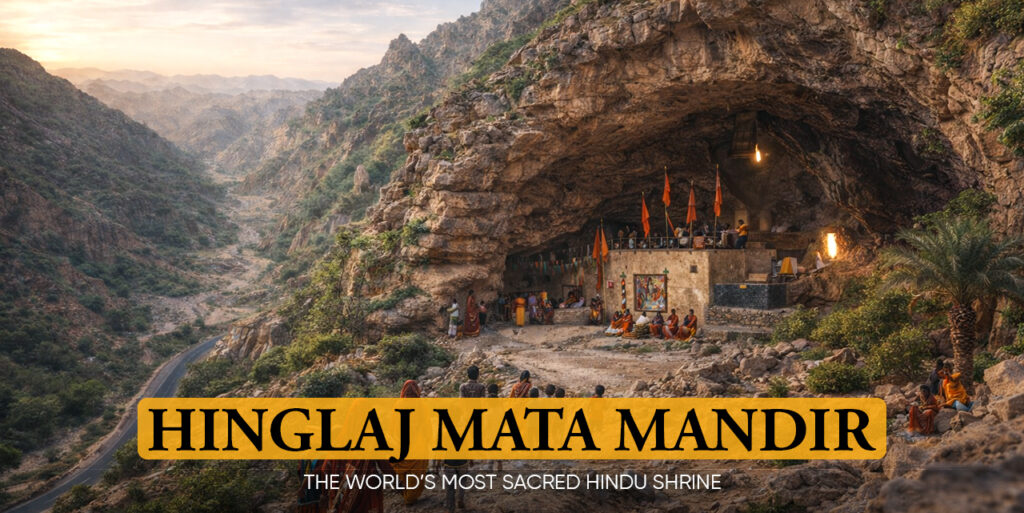

The Hinglaj Mata Mandir, situated in the Balochistan mountain ranges of Pakistan, serves as a temple that embodies the values of faith, resilience, and shared community bonds. The holy shrine known as Shaktipeeth Shri Hinglaj Mata Mandir operates as one of the most sacred Hindu worship sites, which draws international pilgrims who come to the shrine from all parts of South Asia.
Every year, thousands of devotees begin a challenging spiritual journey to Hinglaj Mata Mandir in Pakistan, traveling across deserts, rocky terrains, and winding mountain paths to reach this divine destination. The ancient story of Goddess Sati and Lord Shiva inspires them to believe in the sacredness of Hinglaj, which serves as a spiritual site.
The Hinglaj Mata Mandir holds deep cultural and spiritual value for Hindus who practice their faith in Pakistan. The site serves as a pilgrimage destination that functions as a living heritage site that demonstrates both dedication to God and peaceful coexistence between different religious groups. The Hinglaj Mata Mandir in Balochistan maintains its ancient traditions, which continue to generate faith and curiosity, and respect from pilgrims and visitors, and researchers.
In This Guide, we will:
- Explore the historical and religious significance of Hinglaj Mata Mandir.
- Learn the route from Karachi to the shrine.
- Discover the sacred sites associated with Hinglaj Mata Mandir.
- Read about stories of Hindu-Muslim unity surrounding the pilgrimage.
- Get practical advice for all visitors planning the journey.
- For further information on Hindu pilgrimages in Pakistan, see this article.
And for even more details, watch the documentary Goddess of Hinglaj or read its overview on Rava Studios.
Importance of Hinglaj Mata Mandir for Hindus
Hinglaj Mata Mandir, one of the most revered Hindu pilgrimage sites, holds a unique and sacred place in the hearts of the Hindu community. For centuries, this shrine has symbolized devotion, spiritual continuity, and the enduring presence of the divine in the rugged landscapes of Balochistan.
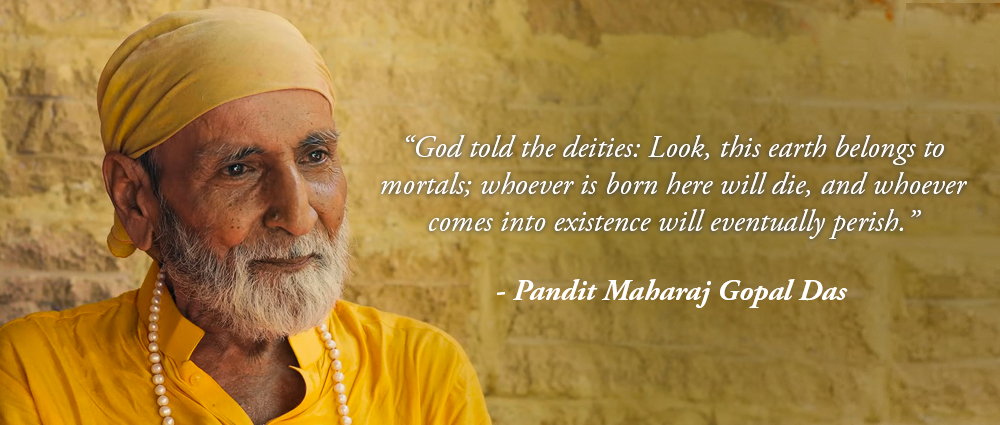
According to the documentary Goddess of Hinglaj, Pandit Maharaj Gopal Das reflects on the spiritual philosophy behind existence, saying:
History and Spiritual Significance of Hinglaj Mata Mandir
Shaktipeeth Shri Hinglaj Mata Mandir Balochistan is considered the holiest of all the 51 Shaktipeeths, making it the most important religious place in Hindu tradition. These sacred sites are associated with the legend of Goddess Sati and Lord Shiva, representing divine feminine power and spiritual balance.
The origin of the Mandir is embedded in Hindu cosmology and the cycles of time known as Yugas. During the Satya Yuga, deities such as Shiva, Parvati, Sati, Ganesh, and Kartik Swami manifested on earth. The Treta Yuga witnessed the avatars of Rama, Sita, Laxman, and Hanuman, while the Dwapara Yuga brought Krishna, Radha, and Rukmani. Currently, humanity is believed to be living in the Kali Yuga, an era of spiritual challenges and transformation. For a deeper understanding of the Yugas, check this guide.
The documentary “Goddess of Hinglaj” takes a close look at the spiritual and cultural world of Hinglaj Mata Mandir in Pakistan. It shows the dedication of pilgrims who travel across deserts and mountains to honor this important site. The film highlights traditional practices and shows how faith, culture, and community come together at this temple. It also shows how Hindus and local communities work together to keep the rituals alive and maintain the shrine. Beyond its religious significance, the documentary captures the joy, strength, and lasting heritage of Hindus in Pakistan, making it a meaningful tribute to devotion and cultural continuity.

Where is Hinglaj Mata Mandir Located?
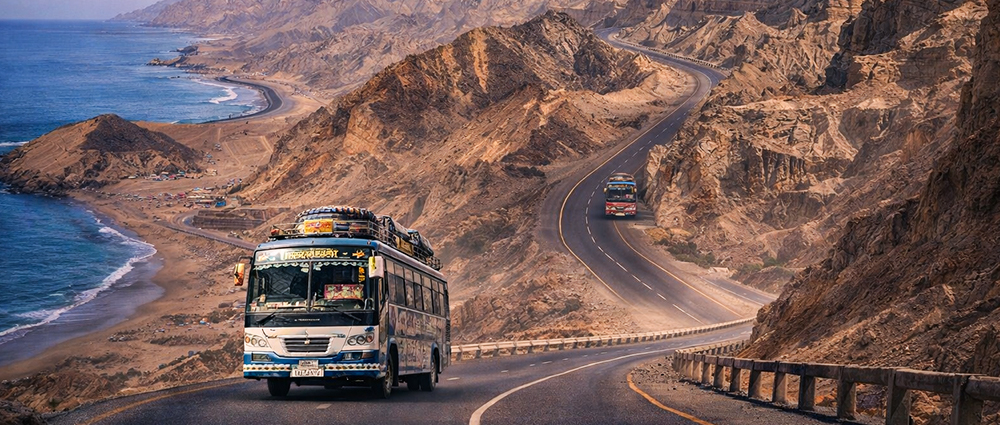
Hinglaj Mata Mandir Balochistan sits in the Lasbela district of Balochistan, Pakistan. Traveling from Karachi to the temple is challenging but deeply rewarding, with sweeping views of deserts, rugged mountains, and quiet, open landscapes.
- Distance from Karachi: Pilgrims cover about 600 kilometers to reach the shrine.
- Travel Time: By road, the journey usually takes 12–14 hours, depending on traffic and rest stops.
- Road Conditions: The route passes through deserts and rocky mountains, so careful driving is needed. In some areas, a 4×4 vehicle is recommended.
- Best Time to Visit: November to February offers mild weather and clear skies, making the journey safer and more enjoyable.
How to Reach Hinglaj Mata Mandir
By Road
The most common route begins in Karachi, passes through Hub, and continues to Lasbela. From there, the road winds through mountains and deserts, offering breathtaking views and a growing sense of spiritual quiet excitement.
By Local Guides
Many pilgrims choose experienced local guides who are familiar with the area. They ensure safety along the rocky paths and help pilgrims focus on their spiritual journey.
By Hinglaj Yatra (Barefoot Pilgrimage)
Some devotees walk barefoot as part of an ancient tradition. This requires preparation and patience. Walking barefoot through remote desert and mountain paths gives the trip deeper meaning, allowing time for reflection, personal growth, and a stronger connection with the divine.
The Pilgrimage Journey to Hinglaj Mata Mandir
The trip to Hinglaj Mata Mandir in Balochistan is an important pilgrimage for many devotees from Pakistan and beyond. In the documentary Goddess of Hinglaj, Hari Mohan Solanki notes that pilgrims come from cities like Karachi, Hyderabad, Thatta, and other parts of Sindh. Many travel on foot or by vehicle, covering long distances over several days.
Starting the Yatra
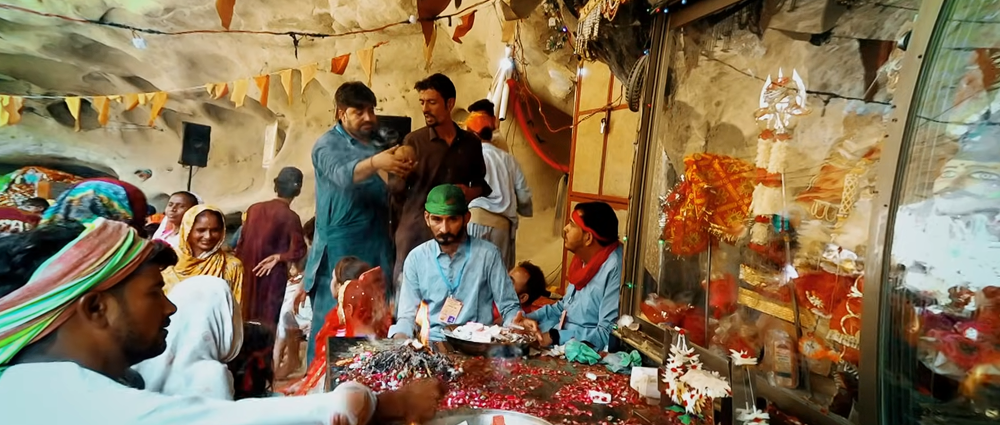
For people from interior Sindh, the pilgrimage begins at temples near their homes. Some of the famous ones are the Shiv Duga Temple in Hyderabad, and in Thatta, there’s the Kali Mata Temple and the Shangh Bhawani Temple. Pilgrims set out from these temples in small groups or join larger gatherings to begin their spiritual journey.
The first major stop is Lyari, at the Mata Sherawali Mandir, where a three-day fair is held, attracting devotees from all over Pakistan. Here, pilgrims rest, refresh, and receive support from the local community, who provide tea, water, and snacks to travelers.
Day One: Chandargup – The Beginning of the Journey
After departing Lyari, pilgrims enter Balochistan and head toward Chandargup, a large natural mud volcano regarded as highly sacred in Sanatan Dharma. Here, the mud volcano is worshiped as an embodiment of Lord Shiva, also known as Baba Chandargup.
Devotees believe it is essential to pay respects at Chandargup before entering the main Hinglaj Mata Mandir. Arriving usually in the afternoon, pilgrims perform rituals, climb the surrounding hills, and meditate at the sacred site. These ceremonies bring the first day of the Yatra to a meaningful close, setting the tone for the spiritual journey ahead.
Day Two: Journey Along the Hingol River and Offerings to Ganesh
On the second day of the pilgrimage, pilgrims reach the Hingol River. This site is important for resting and performing rituals. Here, they complete holy rites, offer prayers, and receive blessings. Hindu tradition holds that worshiping Lord Ganesh at this stage brings great blessings, as the Ganesh shrine symbolizes the spiritual beginning of the main journey to Hinglaj Mata Mandir.
After Ganesh’s worship, devotees proceed to the Aashapura Mandir, where they offer prayers to their ancestors (Pitron) and complete their prayers by nightfall. Later, they visit the Kali Mata Mandir and perform similar rituals. Although this temple is only 150–200 meters from the previous site, the festival is of great significance, and preparations continue for the final phase of the pilgrimage.
Day Three: Reaching the Sacred Hinglaj Mata Mandir
By the third morning, pilgrims arrive at the holy shrine of Shri Hinglaj Mata, bringing to an end a journey that demands endurance while refreshing the soul. The Yatra usually takes place between November and February, when the weather is more pleasant and the path is easier to follow. Across these three days, devotees, from local Hindus in Pakistan to visitors from all over the world, come together, united in devotion, reflection, and a shared sense of spiritual awakening.
Exploring Hinglaj Mata Mandir in Hingol National Park
Hinglaj Mata Mandir Balochistan is located in the heart of Balochistan, within Hingol National Park, Pakistan’s largest national park. This park covers about 6,100 square kilometers and runs along the Makran Coastal Highway from Karachi to Gwadar. It includes deserts, mountains, river valleys, and a long coastline along the Arabian Sea. The park has rocky cliffs, sandy plains, dry riverbeds, and unique geological formations. This varied landscape creates a beautiful setting for pilgrims and combines natural beauty with deep spiritual meaning. The scenery here is unlike anything else in South Asia.
Hingol National Park is not only a haven for wildlife, including wolves, foxes, and migratory birds, but it also provides a dramatic and spiritual backdrop for pilgrims traveling to Hinglaj Mata Mandir in Balochistan. The natural features here have become inseparable from the pilgrimage experience, adding both awe and reverence to the journey.
Notable Natural Landmarks Along the Pilgrimage
Princess of Hope:
One of the park’s most striking formations is the Princess of Hope, a towering rock structure sculpted by wind and rain over centuries. Its human-like shape has inspired awe and curiosity among visitors, and many pilgrims pause to admire it as a symbol of endurance and resilience, reflecting the qualities needed for the pilgrimage itself.
Mud Volcanoes:
The region is also home to several mud volcanoes, geological wonders that are sacred to Hindus. Among these, Chandragup, or Baba Chandragup, holds immense religious significance. Pilgrims believe that worshiping at this mud volcano is essential before proceeding to the Shaktipeeth Shri Hinglaj Mata Mandir. Here, devotees perform purification rituals, meditate, and seek divine blessings, honoring Lord Shiva through the volcano’s natural embodiment.

Chandragup:
Chandragup is the most famous of these sacred mud volcanoes, rising majestically over the surrounding land. Pilgrims climb its slopes to offer prayers and leave after symbolic offerings, making it a key spiritual stop on the Hinglaj Yatra. Nestled within Hingol National Park, it blends the awe of nature with deep spiritual significance, connecting devotees to both the earth and the divine.
What Makes the Pilgrimage Through This Landscape So Unique?
The pilgrimage to Hinglaj Mata Mandir in Pakistan is unlike any other because of its integration with the natural environment. Travelers traverse deserts, rugged mountains, coastal plains, and rocky outcrops, encountering formations like the Princess of Hope and sacred sites like Chandragup. This combination of spiritual devotion and immersive natural beauty creates a journey that is as much about inner reflection as it is about the physical trek.
Pilgrims navigate tough but breathtaking landscapes, testing patience and determination, while the breathtaking vistas inspire reverence and a sense of connection to something greater. In this way, the pilgrimage is not just a devotional journey but also an intimate communion with one of Pakistan’s most extraordinary landscapes.
Hindu-Muslim Unity.
Hinglaj Mata Mandir Balochistan stands as a powerful symbol of unity, where people from different faiths come together to support pilgrims and keep the age-old tradition alive. The shared effort reflects Balochistan’s spiritual identity. The Hindu-Muslim communities living side by side here show how faith can bring people closer and encourage understanding.
This mandir is not just a religious site; it acts as a bridge between cultures. It reminds us that shared history, traditions, and respect for diverse beliefs can promote understanding, particularly in a region known for its vibrant spiritual and cultural heritage.
Support from Local Muslims
Local Muslim communities play a vital role in supporting pilgrims during the Hinglaj Yatra. Their help takes many forms:
- Guiding Pilgrims: Experienced locals assist yatris in navigating the rugged desert and mountain paths safely.
- Providing Food and Shelter: Villagers generously offer tea, water, snacks, and sometimes even a place to rest along the journey.
- Assisting During the Yatra: They help carry supplies and ensure safety on difficult paths.
This support shows that Hinglaj Mata Mandir is not just a place of worship but also a space where people of different faiths come together, promoting harmony and respect.
A Step Toward UNESCO World Heritage: Hinglaj Mata Mandir
Hinglaj Mata Mandir and the surrounding land form part of the Hingol Cultural Landscape, now part of UNESCO’s Tentative List for World Heritage status. This recognition reflects just how important the shrine is, not only spiritually, but also historically and culturally. It is a place of worship, where people continue to practice their faith. It is located in the beautiful Hingol National Park, near the flowing Hingol River, and the sacred mud volcanoes. These volcanoes have been part of the pilgrimage tradition for centuries.
Being on the Tentative List brings international attention to Hinglaj Mata Mandir in Pakistan, and reinforces efforts to preserve its heritage. If inscribed as a UNESCO World Heritage Site, it would gain global recognition for its religious, cultural, and natural importance, celebrating the rich traditions of Hindus in Pakistan and further highlighting the pilgrimage’s spiritual and historical value.
Message to Pilgrims:
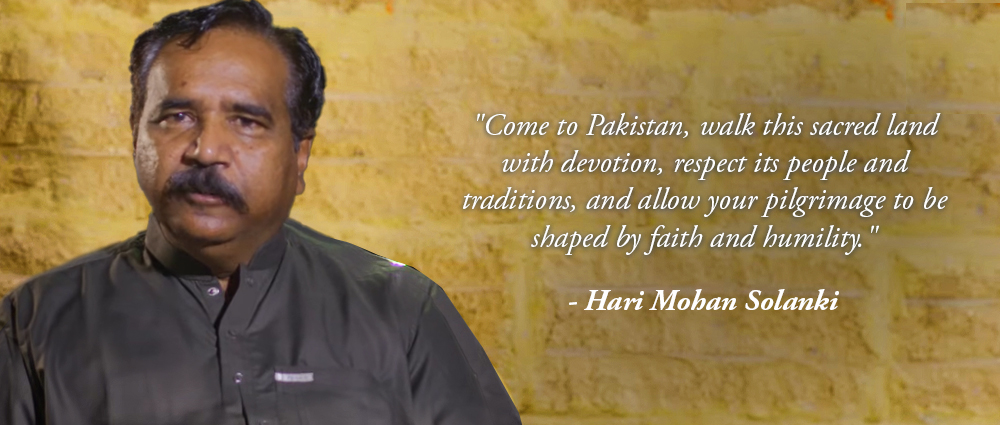
“Come to Pakistan, walk this sacred land with devotion, respect its people and traditions,
and allow your pilgrimage to be shaped by faith and humility.”
– Hari Mohan Solanki
The challenging paths and distant areas are part of the journey and offer moments for reflection and a stronger devotional connection. We invite people from Pakistan and the Hindu community worldwide to visit this sacred land. Experience its natural beauty, ancestral practices, and the hospitality of the locals. This pilgrimage is spiritually fulfilling and takes you to a place that welcomes you with open hearts.
- Bring plenty of water, snacks, and essential medical supplies, as facilities along the way are limited.
- Dress in light, breathable clothing and wear sturdy shoes suitable for walking long distances over rocky paths.
- Protect yourself from the sun with a hat, sunglasses, and sunscreen, since daytime temperatures can be very high.
- Travel in groups or with experienced guides who know the route and local conditions.
- Respect local customs, religious traditions, and the natural environment of Hingol National Park.
- Always keep emergency contacts and identification documents with you.
- Follow the instructions of local authorities and security personnel to ensure a safe and smooth pilgrimage.
Safety and Security at Hinglaj Mata Mandir.
Visitors often have safety concerns when traveling to Hinglaj Mata Mandir location in Pakistan due to its remote location. According to Hari Mohan Solanki in the documentary Goddess of Hinglaj, the region is completely safe for pilgrims.
The Government of Pakistan and local security agencies actively ensure the safety of visitors by offering guidance and support throughout the journey. The government of Pakistan has actually positioned army personnel in the area specifically for the protection of Yatris there for the pilgrimage, who ensure the utmost safety of the pilgrims. This combination of security measures and local community support makes it safe and well-organized. Pilgrims can focus on their devotion and reflection, knowing that both authorities and locals work together to provide a secure environment.
Conclusion
For centuries, pilgrims have looked toward Hinglaj Mata Mandir location as a symbol of faith, hope, and unity. The journey to this sacred site, from the mud volcano of Chandragup to the cave of Shaktipeeth Shri Hinglaj Mata Mandir, is not just about traveling through the beautiful Hingol National Park but also about personal spiritual growth.
This pilgrimage shows the solidarity between Hindus and Muslims and represents devotion, cultural continuity, and coexistence. For pilgrims, Hinglaj is more than a destination; it is a deep experience of faith and connection that lasts through generations. Watch the background of the Hinglaj’s story and how Mata Sati has a shrine in Pakistan on the Goddess of Hinglaj, a Documentary by Rava Documentary Films.
FAQs
Where is Hinglaj Mata Mandir located?
Hinglaj Mata Mandir location is in the Lasbela district of Balochistan, Pakistan, surrounded by vast mountains and desert landscapes. Most pilgrims begin their journey in Karachi, traveling through Hub and Bela, gradually leaving the busy city behind as they approach the quiet, sacred surroundings of the shrine.
What is the historical significance of Hinglaj Mata Mandir in Balochistan?
It is one of the 51 Shaktipeeths where the body of Goddess Sati fell after being struck by Vishnu’s Sudarshan Chakra. The site is sacred to Hindus and has been a place of worship for thousands of years.
How can one visit Hinglaj Mata Mandir safely?
It’s recommended to travel with local guides familiar with the terrain. Prepare for long road journeys and follow safety instructions for mountain paths.