
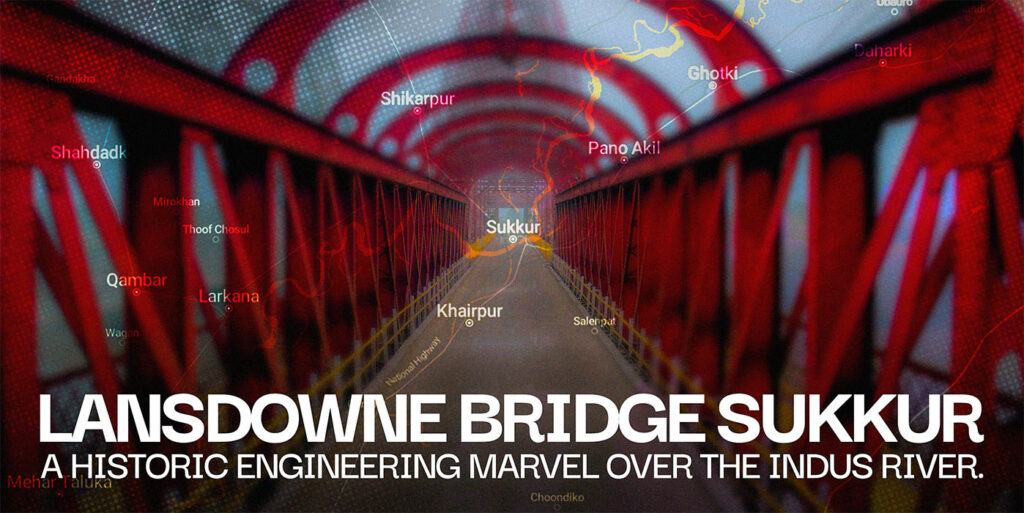
Built in the 1880s, the Lansdowne Bridge Sukkur crosses the powerful Indus River and remains one of the 19th century’s greatest engineering achievements. It connects the cities of Sukkur and Rohri, functioning as a connection between northern and southern Sindh. Constructed during the British colonial period, the Lansdowne Bridge Pakistan remains a remarkable example of early cantilever engineering and continues to serve railway traffic more than a century after its construction.
More than just steel and stone, the Lansdowne Bridge represents ambition, resilience, and sacrifice. From its daring construction over the powerful Indus waters to its place in Sindhi culture through the famous song “Ho Jamalo,” the bridge is deeply woven into the identity of Sukkur.
What You’ll Learn in This Blog
- How does the Lansdowne Bridge in Sukkur remain one of the most remarkable engineering accomplishments of the 19th century?
- Where the bridge is located and why its position over the River Indus made it so important.
- The real story behind the Lansdowne Bridge, including who designed it and how it was constructed.
- The extreme challenges engineers faced while building over the powerful Indus River.
- What a cantilever bridge actually is and why this design was chosen for the Lansdowne Bridge Pakistan.
- How the bridge strengthened the Sukkur–Rohri railway connection.
- The difference between the Lansdowne Bridge and the Ayub Bridge.
Where Is Lansdowne Bridge Located?
The Lansdowne Bridge, in Sukkur, Sindh, crosses the Indus River to connect Sukkur with Rohri and stands near the Sukkur Barrage, a key irrigation structure in Pakistan.
Geographically, according to the Indus River map, the River Indus flows from the Tibetan Plateau through Gilgit-Baltistan, Khyber Pakhtunkhwa, Punjab, and Sindh before emptying into the Arabian Sea. Sukkur lies in upper Sindh, making the bridge a strategic crossing point on the river’s lower stretch.
Because of its location, the bridge became essential for railway expansion and trade. Even today, the Sukkur Bridge area remains a key transport hub in Sindh.
The History of the Lansdowne Bridge
The Lansdowne Bridge story begins in the late 19th century. British authorities needed to build a permanent railway crossing over the River Indus. At that time, trains had trouble moving between the northern and southern regions of Sindh because the river was wide and had strong currents.
To solve this problem, the top five engineers from London submitted design proposals: James Ramsay, General James Brown, Sir Guilford Lindsey Molesworth, Richard Bell, and Alexander Meadows Rendel. Ultimately, Rendel’s design was chosen for its creativity and strength.
The Westwood Bailey Company was awarded the construction contract, and the work took nearly two years to complete. The job was tough and dangerous. Engineers and workers battled with strong river currents, intense heat, and many technical challenges. Tragically, many workers lost their lives during construction, which led to the bridge being called Blood Bridge.
The Lansdowne Bridge was not only an engineering marvel but also held significant strategic importance for the British. To protect against potential attacks, particularly from Russian forces, eight bunkers were constructed along its length. This shows the political tensions of the time and makes it clear that the bridge was important both for transport and for defense.
Despite these challenges, the Lansdowne Bridge emerged as one of the most advanced railway bridges of its time. It stands as an important achievement in South Asian engineering, showing both technical skill and human determination.
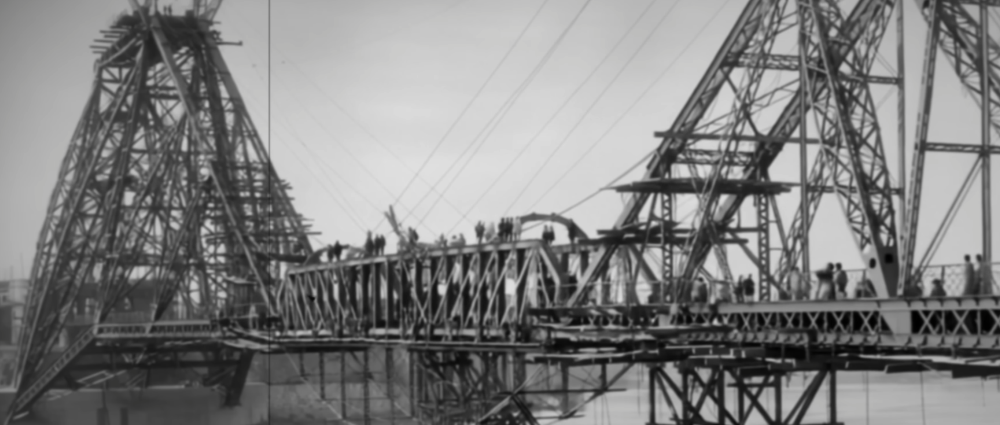
Constructing the Lansdowne Bridge over the mighty River Indus was no small feat. Stretching over 3,000 kilometers, the Indus is one of the longest and most powerful rivers in the world, flowing through history and sustaining civilizations along its banks for centuries.
The Sukkur region has a strong cultural connection to the Indus River. The famous Sindhi folk song Ho Jamalo celebrates not just the land and spirit of Sindh, but also the resilience and courage of the local people who lived along its banks. The bridge, rising over the mighty Indus, became a symbol of this enduring pride and connection between people and river. Watch the full story to see the bridge’s history, construction, and cultural significance in detail.

Back in the 1880s, when the bridge was being built, the river’s flow was highly unpredictable. At the time, nothing like the Sukkur Barrage existed to tame the river or regulate its waters for irrigation. Seasonal floods could turn the Indus into a fast-flowing river, bringing tough challenges and making conventional bridge designs extremely risky.
Engineers had to study the River Indus, its depth, current speed, and seasonal behavior, before choosing a cantilever design, which avoided the need for support pillars in the river’s middle.
After the bridge was completed, many people were afraid to cross it, worried that the massive iron structure might not hold the weight of a passing train. Taking the first train across felt like a risk no one was willing to take.
According to a popular local story, a convicted man named Jamalo was offered his freedom if he agreed to ride the first train over the bridge. Jamalo accepted the offer and bravely made the journey. As the train rumbled loudly across the metal structure, his family, friends, and villagers sang “Ho Jamalo” to encourage him. Over time, the song became a cherished and joyful part of Sindhi culture, often sung to celebrate bravery and happiness.
While modern engineering projects like the Sukkur Barrage have improved control over the Indus, the bravery and creativity shown in building the Lansdowne Bridge in the 19th century remain extraordinary.
What is a Cantilever Bridge?
A cantilever bridge is a type of bridge that uses beams extending out from a single support. Instead of relying on pillars in the middle, the beams are held steady by carefully placed weights or strong anchors. With this approach, engineers can build bridges over long sections of river without mid-river support of the river or valley safely, even in places where building supports in the center would be difficult or dangerous. Because of this, cantilever bridges are especially useful for wide rivers, deep valleys, or other challenging landscapes.
The strength of a cantilever bridge comes from how its beams work together. Some parts are pulled, while others are pushed, and this balance helps the bridge stay strong. Because of this, it can carry heavy loads like trains, vehicles, or even people while stretching across long distances without needing central support. By balancing these forces so effectively, cantilever bridges combine strength with simple, clever design.
The First Cantilever Bridge in Pakistan
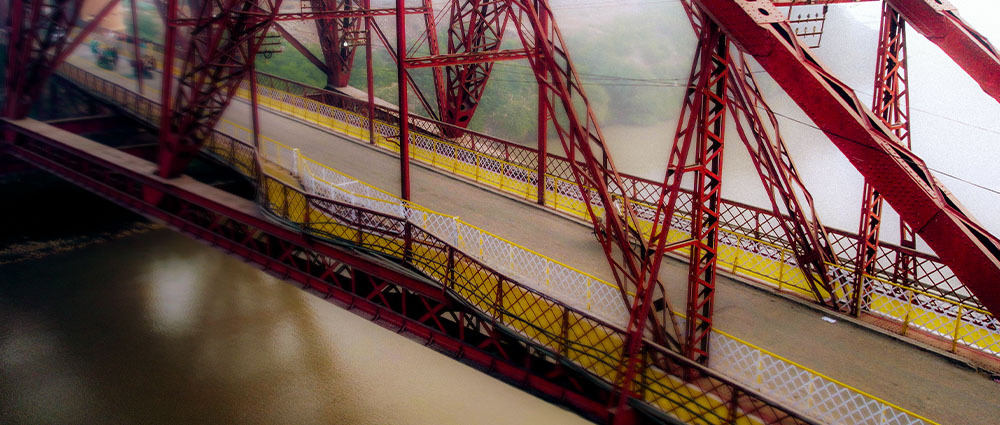
The Lansdowne Bridge Sukkur is a remarkable cantilever bridge with a steel framework that was carefully crafted to stretch across the powerful River Indus without the need for supports in the middle. When it was completed in the late 19th century, it was considered a groundbreaking achievement. Engineers had to overcome the river’s unpredictable currents and seasonal floods, which made construction a tough challenge.
By using a cantilever design, the bridge could remain resilient while allowing the Indus to flow freely beneath it. This clever solution showcased the remarkable engineering skill of the Victorian era and set a new standard for large-scale bridge construction in South Asia. Over the years, the Lansdowne Bridge earned recognition far beyond its home region, standing alongside other celebrated cantilever bridges around the world.
Today, the Lansdowne Bridge in Pakistan remains an iconic engineering landmark. As one of the earliest cantilever railway bridges in the region, it has carried trains for more than a century. Its continued service is a testament to the enduring strength of cantilever design and a proud reminder of Sindh’s industrial heritage.
Cantilever bridges are admired around the world for their clever design and engineering brilliance. Some of the most famous examples include Scotland’s Forth Bridge, a testament to Victorian-era engineering; Canada’s Quebec Bridge, famous for having the world’s longest cantilever span; India’s iconic Howrah Bridge over the Hooghly River; Japan’s Minato Bridge, a massive urban road cantilever; and the Walnut Lane Memorial Bridge in the US.
The Lansdowne Bridge Sukkur Today
Before the construction of the Lansdowne Bridge, crossing the River Indus near Sukkur was slow and unreliable. Ferries and temporary structures could not support the growing demands of the railway.
The bridge changed transportation by establishing a permanent railway link between Sukkur and Rohri, which helped boost trade and economic growth.
The Lansdowne Bridge in Sindh is no longer used for railway traffic, as trains were shifted to the nearby Ayub Bridge in 1962.
Today, it serves as a road bridge for light vehicles such as cars, motorcycles, and rickshaws, as well as pedestrians traveling between Sukkur and Rohri. Heavy vehicles are generally restricted to protect the old structure.
Besides its practical use, the bridge is also an important historical landmark, admired for its unique design and scenic views over the Indus River. It remains a proud symbol of the region’s engineering heritage and continues to be part of everyday life in the area.
To know more, watch our documentary, The Lansdowne Bridge.
FAQs
Where is the Lansdowne Bridge Located in Pakistan?
The Lansdowne Bridge Sukkur is located in Sukkur, Sindh, Pakistan. It spans the River Indus and connects Sukkur with Rohri. It lies near the Sukkur Barrage and forms part of the Sukkur–Rohri railway line.
Why is the Lansdowne Bridge Sukkur considered an engineering marvel?
It is considered an engineering marvel because it was one of the earliest large-scale Cantilever Bridge projects in South Asia. Built over the challenging River Indus without mid-river supports, it showcased advanced engineering for its time.
What is a Cantilever Bridge?
A Cantilever Bridge is a bridge constructed using beams supported at one end, extending outward without central supports. It balances tension and compression forces and is ideal for wide rivers like the River Indus.
Is Lansdowne Bridge a cantilever Bridge?
Yes, the Lansdowne Bridge Sukkur is a Cantilever Bridge built with steel trusses to safely span the River Indus without central pillars.
What is the difference between the Lansdowne Bridge and the Ayub Bridge?
The Lansdowne Bridge is a 19th-century Cantilever Bridge designed for railway use. The Ayub Bridge, built later, uses a steel arch design and supports both railway and road traffic. Their structural principles and construction periods are different.