

Few figures in Pakistan’s history hold as much significance and controversy as General Yahya Khan. In just two years in power, he altered the subcontinent, leading to the 1971 war, the fall of Dhaka, and the making of Bangladesh. Pakistan’s most turbulent chapter cannot be understood without first understanding the man behind it.
Who Was Yahya Khan?
General Agha Muhammad Yahya Khan was a Pakistani military officer who served as the third President of Pakistan from 1969 to 1971. Born near Peshawar into a family with deep military roots of the Persian ruler Nadir Shah, Yahya Khan was marked for military service from an early age.
He was educated at Punjab University and graduated at the top of his class from the Indian Military Academy in Dehradun. Commissioned into the British Indian Army in 1939, he served with distinction in the Mediterranean theatre during World War II, fighting in Italy and the Middle East. After the 1947 Partition, he joined the newly formed Pakistan Army and helped establish the Staff College in Quetta, one of his early institutional contributions.
He moved quickly through the ranks and earned high praise along the way. He became Pakistan’s youngest brigadier general at 34 and its youngest full general at 40. During the 1965 Indo-Pakistan War, he played a significant role in executing Operation Grand Slam in Indian-administered Kashmir. In 1966, he was appointed Commander-in-Chief of the Pakistan Army by President Ayub Khan.
As protests spread across Pakistan in 1968 – 1969, Ayub Khan’s grip on power weakened. He stepped down and handed control directly to Yahya Khan. In March 1969, Yahya suspended the constitution and declared martial law. Yet he promised what few military rulers ever do: a return to democracy.
Why the 1970 Elections Were Historic
When Yahya Khan announced general elections for December 1970, it was a moment of genuine promise. These were to be Pakistan’s first direct, free, and fair general elections since independence, a country that had spent most of its existence under martial law or managed democracy, finally getting a real vote.
In March 1970, Yahya introduced the Legal Framework Order (LFO), which abolished the One Unit system. This system had grouped all of West Pakistan’s provinces into one administrative block. Removing it restored each province’s identity and allowed elections to be held based on population. For the first time, East Pakistan would have its fair share of political power.
The elections took place on 7 December 1970, and the results shocked everyone. Sheikh Mujibur Rahman’s Awami League swept East Pakistan, securing 167 of East Pakistan’s 169 seats of the National Assembly, enough to form a majority government on its own. In West Pakistan, Zulfikar Ali Bhutto’s Pakistan Peoples Party (PPP) dominated, winning 81 seats.
For the first time in Pakistan’s history, an election had produced a clear, democratic mandate. But the political establishment was not prepared to honor it.
Yahya Khan and the Political Crisis
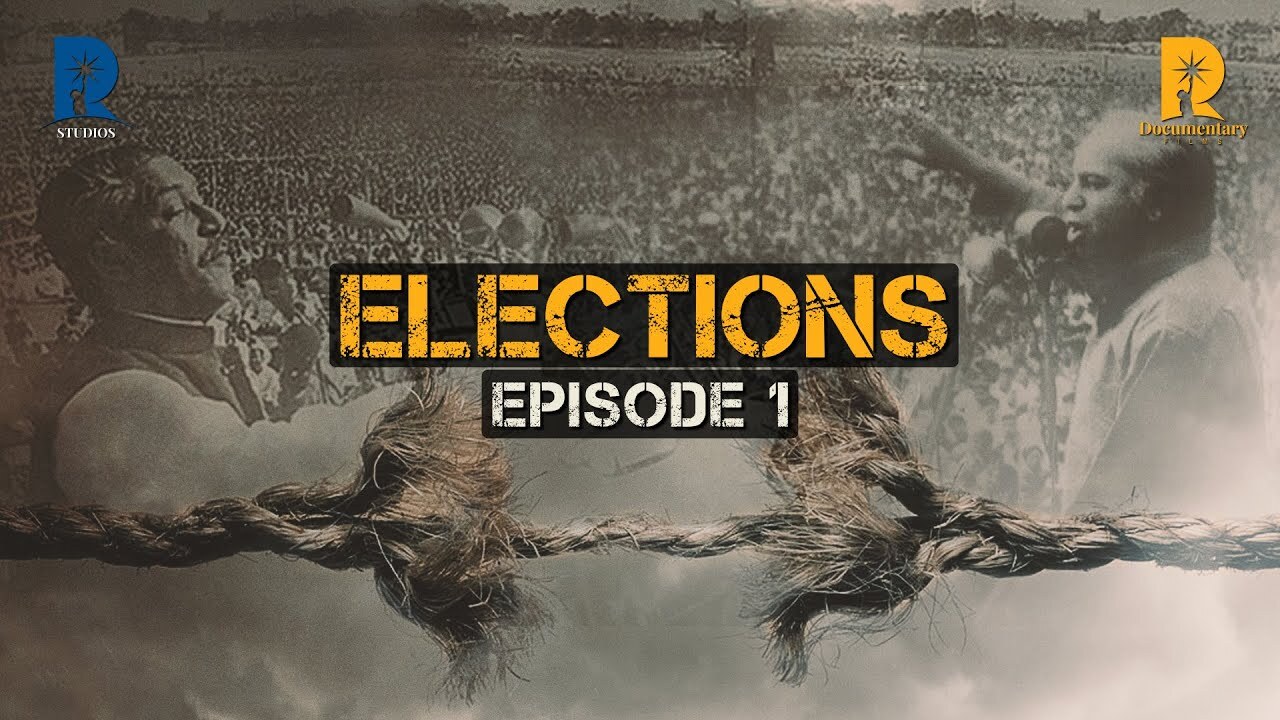
The results of the 1970 elections created a crisis that had less to do with democracy and more to do with power. Bhutto had expected to play a central role in the new government. When that did not happen, he refused to accept his place in opposition. He boycotted the National Assembly session set for March 3, 1971, and demanded a share of power even though he had clearly lost the election.
Yahya Khan, caught between West Pakistan’s political elite and the military’s own interests, sided with Bhutto’s position and postponed the National Assembly session indefinitely. The announcement triggered mass outrage in East Pakistan. Sheikh Mujibur Rahman launched a non-cooperation movement that effectively brought East Pakistan to a standstill. The streets of Dhaka, Chittagong, and Rajshahi were filled with millions demanding that their democratic rights be honored.
Negotiations continued through March 1971. Yahya and Bhutto both flew to Dhaka, but they yielded nothing. Behind the scenes, the military had already made its decision.
On the night of 25 March 1971, Yahya Khan ordered Operation Searchlight, a large-scale military crackdown targeting Bengali politicians, intellectuals, students, and activists. It was meant to crush the independence movement in days. Instead, it ignited a liberation war.
How the Crisis Led to the 1971 War
Operation Searchlight failed to restore order. It only made things worse. Bengali soldiers and police joined ordinary citizens to form the Mukti Bahini and fight back. Violence spread across East Pakistan, pushing millions of refugees across the border into India.
The humanitarian catastrophe drew the world’s attention. By December 1971, India intervened militarily. The Indo-Pakistani War of 1971 lasted only 13 days. On 16 December 1971, Pakistani forces in Dhaka signed the instrument of surrender, the largest military capitulation since World War II. East Pakistan became Bangladesh.
To understand the full scale of events, the human cost, and the perspectives rarely captured in official histories, we recommend watching Jhaur War of 1971, a Rava Studios’ documentary series on the 1971 conflict, which brings this defining chapter to life through untold accounts. You can also read our detailed piece on the 1971 War.
How Did Yahya Khan Die?
After Pakistan’s defeat, Yahya Khan was a broken figure. Public anger over the military disaster was overwhelming street demonstrations erupted across West Pakistan demanding accountability. To forestall the possibility of a coup by younger officers, Yahya Khan voluntarily handed power to Zulfikar Ali Bhutto on 20 December 1971, just four days after the fall of Dhaka.
Bhutto wasted little time. He placed Yahya Khan under house arrest, where he remained effectively cut off from public life. The man who had once commanded the fate of a nation disappeared almost entirely from view.
In 1979, following the military coup of General Zia ul-Haq, Yahya was released from house arrest by Governor Fazle Haq. He spent his remaining days in quiet obscurity.
General Yahya Khan died on 10 August 1980 in Rawalpindi following a stroke. He was buried in Peshawar, not far from where his story had begun. He died largely unlamented, a controversial figure who had never publicly accepted full responsibility for the events that defined his legacy.
The Legacy of Yahya Khan
Yahya Khan’s legacy is one of profound contradiction. He gave Pakistan something it had never had before, a free and fair election. He broke up the One Unit system and gave provinces their voice back. For a moment, democracy felt possible.
But when that democracy produced a result no one in power wanted to accept, he abandoned it completely. He chose Operation Searchlight over negotiation. What followed was a civil war, widespread killings, intervention by India, and the greatest military loss in Pakistan’s history.
As he once told foreign journalists: “The people did not bring me to power. I came myself,” a line that perhaps explains everything about the limits of his democratic commitment.
Yahya Khan’s time in power is a reminder of what happens when a soldier tries to be a statesman. His name cannot be separated from 1971, a year Pakistan has struggled to come to terms with, and a year Bangladesh was built upon.
Frequently Asked Questions
Yahya Khan was Pakistan’s third president, in power from 1969 to 1971. A soldier by profession, he took over from Ayub Khan during a time of public unrest. He promised free elections and kept that promise in 1970. But when he refused to hand power to the elected Awami League and ordered Operation Searchlight, the 1971 war followed. Today, his name is inseparable from one of the darkest chapters in Pakistan’s history.
If you want to go beyond textbooks and experience the 1971 conflict through real accounts and powerful storytelling, we strongly recommend watching Jhaur — Rava Studios’ documentary on the events of 1971. You can watch the feature cut on YouTube. It brings together perspectives and voices that mainstream history often overlooks.
Yahya Khan died on 10 August 1980 in Rawalpindi from a stroke. After Pakistan’s defeat in the 1971 war, he was placed under house arrest by Zulfikar Ali Bhutto. He was released in 1979 under Zia ul-Haq’s government and lived out his final years in quiet obscurity before passing away at age 63. He was buried in Peshawar.
The 1971 war broke out between India and Pakistan, triggered by the political and humanitarian crisis in East Pakistan. After Yahya Khan’s army launched Operation Searchlight in March 1971, a liberation war erupted, and millions of Bengali refugees fled into India. India intervened militarily in December 1971, and after 13 days of fighting, Pakistani forces surrendered in Dhaka on 16 December 1971. For a deeper look at the causes, course, and consequences of the war, read our full piece on the 1971 War.
For a complete perspective on the outcome of the 1971 war, including the military result, the human cost, and what it meant for Pakistan, India, and the newly born Bangladesh.
The 1971 conflict produced courage on many sides: soldiers, civilians, journalists, and ordinary people who risked everything. The Jhaur documentary by Rawa Studios explores many of these stories, including figures who have rarely been given their due in popular history. Watch the documentary to discover the human faces behind the headlines.
Rather than a gallery of still images, we invite you to experience the events of 1971 in their full depth through Jhaur, Rava Studios’ documentary series. It contains rare archival footage, firsthand accounts, and visual storytelling that bring this pivotal period of South Asian history to life. Watch it on YouTube